First: Text Us a Photo. Don't Mow. Don't Pour Anything Down the Hole.
Before anything else — if you found the nest by getting stung or by nearly running the mower over it, mark the spot from a distance and keep people and pets away from it, especially in August and September. Then text a photo to 717-379-3248 and we'll tell you what you have, usually within the hour. Identification is free, and it decides everything about what happens next.
"Ground Bees" Is Three Different Insects
Almost nobody calls us and says "I have a yellow jacket colony in a subterranean cavity." They say ground bees, or bees in the ground, or bees in my yard. That's the right instinct — you saw something striped going into a hole. But the phrase covers three very different situations, and only one of them is genuinely dangerous.
Yellow Jackets — the dangerous one (most calls)
What you'll see: One single hole with heavy two-way traffic, like an airport runway. Fast, darting, shiny insects with bright, hard-edged yellow-and-black bands. Activity builds all summer and peaks August–October.
Why it matters: By late summer a colony can hold thousands of workers. They sting repeatedly, they defend the nest aggressively, and lawn vibration alone — a mower, a wheelbarrow, kids running — can trigger a mass response. This is the one that needs professional treatment.
Mining Bees — harmless, and we won't kill them
What you'll see: Many small holes scattered across a patch of bare, sandy, or thin lawn, each with a tiny volcano of soil around it. Fuzzy, often smaller than a honey bee. Peak activity in spring, gone by early summer.
Why it matters: These are solitary native bees — every female digs her own burrow. They're excellent pollinators, they essentially never sting, and they disappear on their own in a few weeks. We will tell you when you have these and we won't treat them. If they bother you, the real fix is thickening the turf so there's no bare soil to dig in.
Bumble Bees — usually leave them, sometimes relocate
What you'll see: Big, round, very fuzzy bees going into an old mouse burrow, a compost pile, or under a shed. Far less traffic than a yellow jacket nest — dozens, not thousands.
Why it matters: Bumble bees are important pollinators in decline and are docile unless the nest is directly threatened. If the nest isn't in a high-traffic spot, the best move is to leave it — the colony dies off naturally in fall. If it's next to a doorway or a kid's swing set, we can often relocate rather than exterminate.
Honey Bees — live removal wherever we can
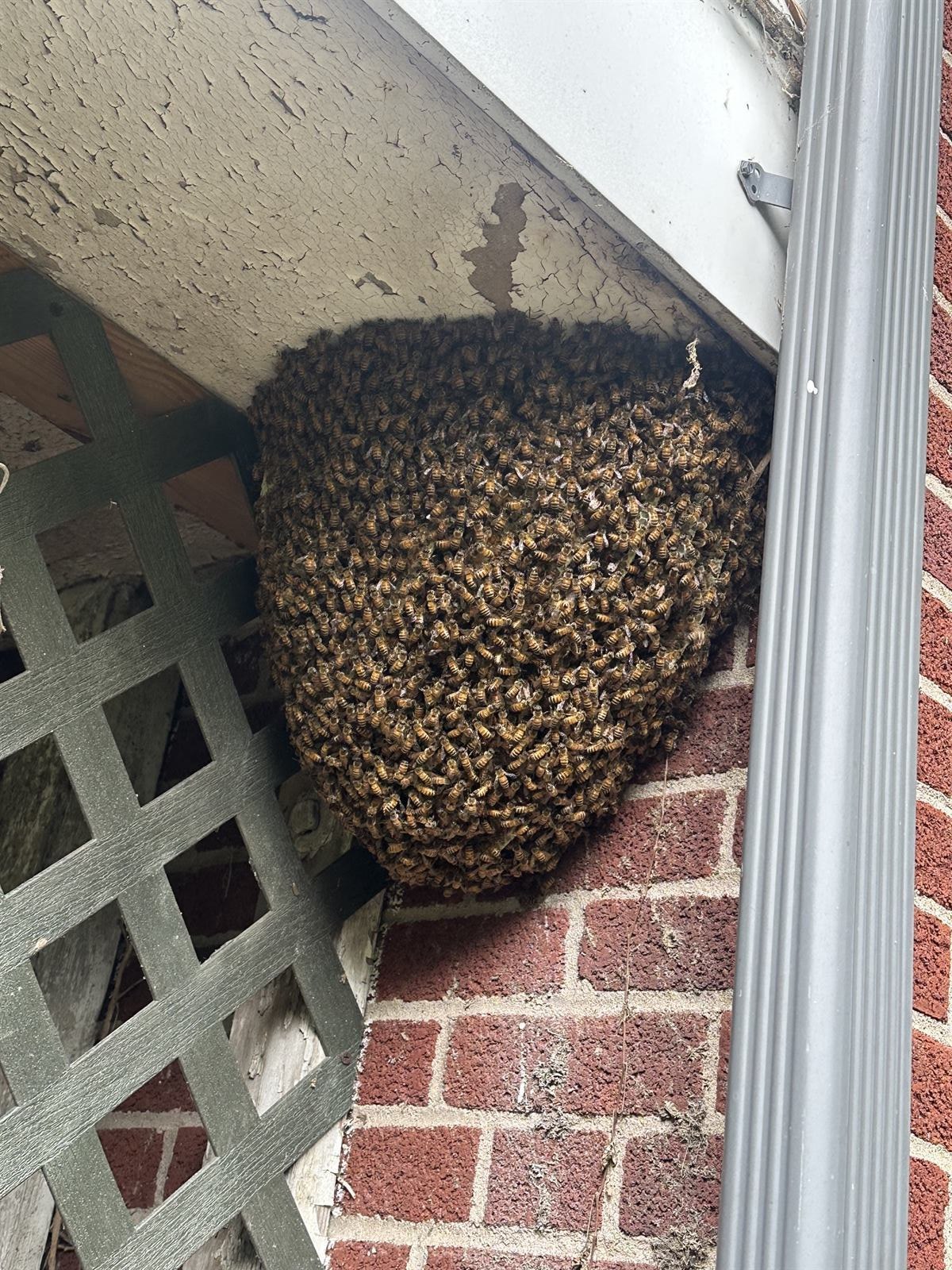
What you'll see: Amber-brown, fuzzy, heavy deliberate flight, often with visible pollen on their legs. Rare in the ground, but it happens in old rodent burrows and hollow stumps.
Why it matters: We're working beekeepers. Honey bees get live removal and relocation — we don't spray them. About 1 in 3 "yellow jacket" calls turns out to be honey bees, which is exactly why we identify before we treat.
The Quick Field Test
From a safe distance — 15 feet is plenty — look at two things: how many holes and how much traffic.
- One hole, heavy constant traffic, aggressive if you get close → yellow jackets. Call us.
- Many holes, one bee each, calm even when you're near → mining bees. Harmless, leave them, they'll be gone soon.
- One hole, modest traffic, big fuzzy bees → bumble bees. Usually leave them; call if it's somewhere people walk.
- Not sure? That's the normal answer. Text a photo to 717-379-3248 — we do this all day in August.
Please Don't Try These
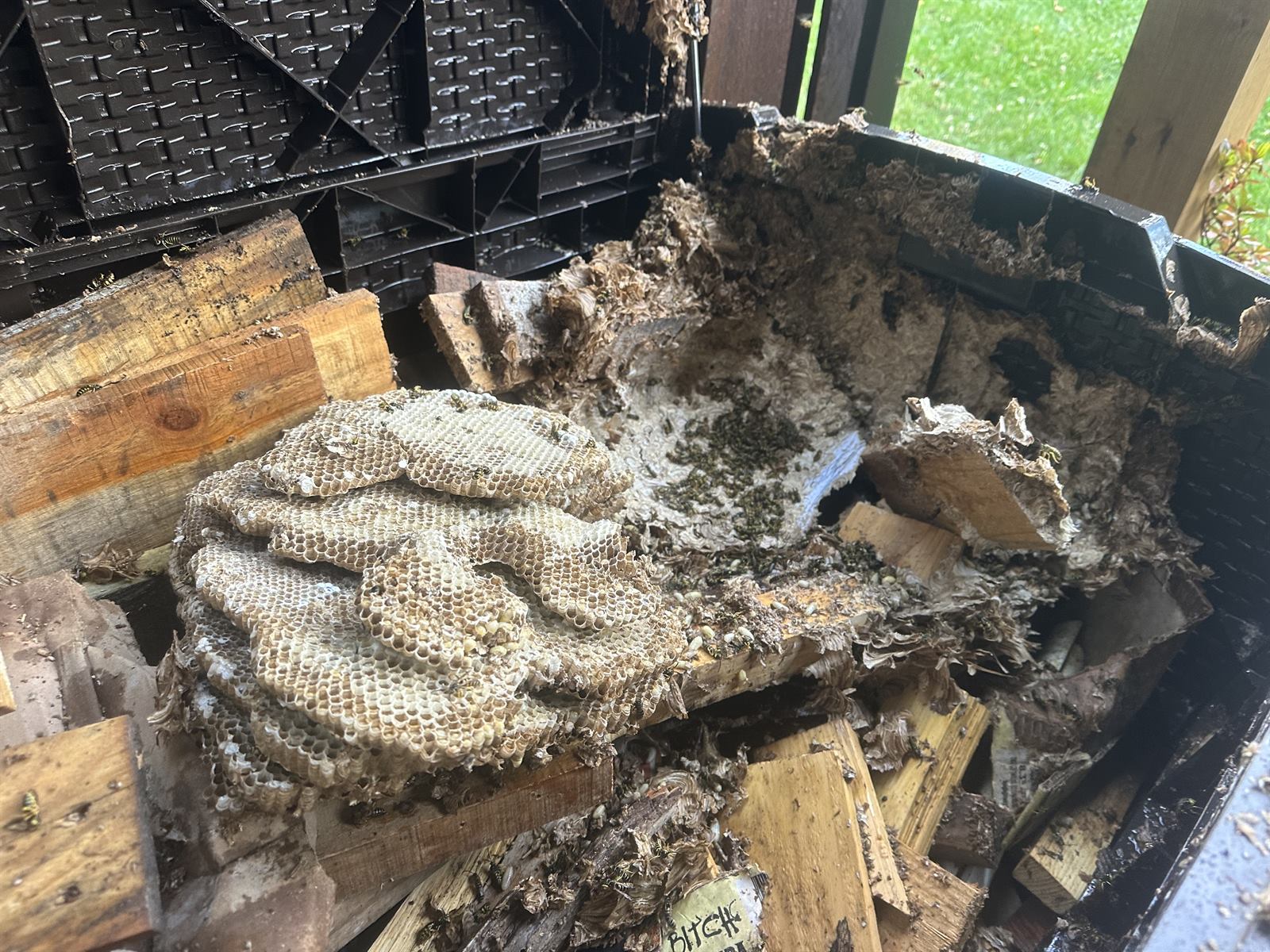
Every August we get called out to yards where someone tried a home remedy first, and the nest is now angrier and harder to treat. For the record:
- Gasoline down the hole. It's illegal to use as a pesticide, it poisons your soil and groundwater, it's a serious fire hazard, and it frequently doesn't even kill the colony.
- Boiling water. Rarely reaches a nest that may sit a foot or more underground. Mostly it just provokes them.
- Hardware-store wasp spray. Built for aerial nests you can see. Into a ground hole it aggravates far more workers than it kills, and you're standing right at the entrance when they come out.
- Blocking the hole. They dig out — and if the nest is against your foundation, they sometimes dig inward, into the house.
- Mowing over it. The single most common way people in Dauphin County get stung a dozen times in ten seconds.
If anyone has been stung and shows signs of an allergic reaction — swelling beyond the sting site, trouble breathing, dizziness — call 911 first. Then call us.
How We Treat a Ground Nest
Straightforward and quick when it's done right, and we do these during the day — no waiting until dark. There are two ways it goes:
- Dust the nest. A low-volume insecticide dust puffed deep into the entry hole. Workers walk through it on the way in and carry it down to the queen and brood, so the whole colony gets it rather than just whoever happened to be home. Usually one treatment.
- Dig it out. Where the situation calls for it, the nest gets excavated and removed outright. That ends it immediately rather than over a day or two.
Either way it's done in full protective equipment, and we flag the area so nobody walks on it for 48 hours. Most colonies are knocked down within a day or two, and we come back and confirm.
Cost: ground nests run $165–$225. If there are multiple nests on the property, we bundle. Estimates are free over the phone, and a texted photo usually gets you an exact number without a visit.
Will They Come Back Next Year?
The colony you treated won't — yellow jacket colonies die off every fall and only new queens overwinter. But a good nest site tends to get reused, so if your yard has a spot that's produced a nest two years running, ask about a spring preventive treatment around the foundation and known sites. That's much cheaper than an August emergency.
Where We Cover
All of the City of Harrisburg (17101–17104, 17109, 17110) — Midtown, Allison Hill, Uptown, Bellevue Park, Boas Heights, Italian Lake. Inner suburbs: Penbrook, Paxtang, Steelton, Highspire. Outer suburbs: Colonial Park, Lower Paxton, Susquehanna Township, Linglestown. Plus Hershey, Hummelstown, Mechanicsburg, Camp Hill, Palmyra, Middletown, Carlisle, and Lebanon.