It's eleven at night, something is moving around over your bedroom ceiling, and you're lying there doing the math: how big is it, is it going to come through, and are the kids okay?
Here's the reassuring part — you almost never have to see the animal to know what it is. The hour you hear it narrows the list faster than anything, and the hole or droppings finish the job. Work through it below, and if you'd rather just ask a person, text us a photo. We do that for free, all day, and we'll tell you honestly if it's something that can wait.
Free ID — Text a Photo to 717-379-3248The single most useful diagnostic for anything overhead. Before you look for droppings or holes, note the clock — it narrows the list faster than anything else.
Gray squirrels. Scampering, rolling (they cache nuts), and scratching, with two clear activity peaks. If it's noisy while you're having coffee and silent at midnight, this is your animal. See squirrels in the attic.
Raccoons. They sound like a person moving around up there, because they're comparably heavy. Add chittering, growling, or the distinctive crying of kits in spring. Often accompanied by torn soffits and a hole far bigger than a squirrel would make.
Rodents or flying squirrels. Flying squirrels are nocturnal, colonial (several rather than one), and get mistaken for rats constantly. Note: rodent control isn't a service we offer — see the bottom of this page.
Bats. Often heard in walls rather than open attic, loudest on hot evenings as they get restless before the nightly fly-out. Go outside at sunset and watch the roofline — that's the confirmation. See bats in the attic.
Didn't hear anything, but something is clearly happening outside? The evidence is usually more specific than people expect — the shape of a hole, whether sod was rolled or dug, how a soffit was opened. One caution before you start looking: photograph droppings, don't sweep or handle them. Raccoon and bat droppings both carry real health risks, and a picture tells us what we need anyway.
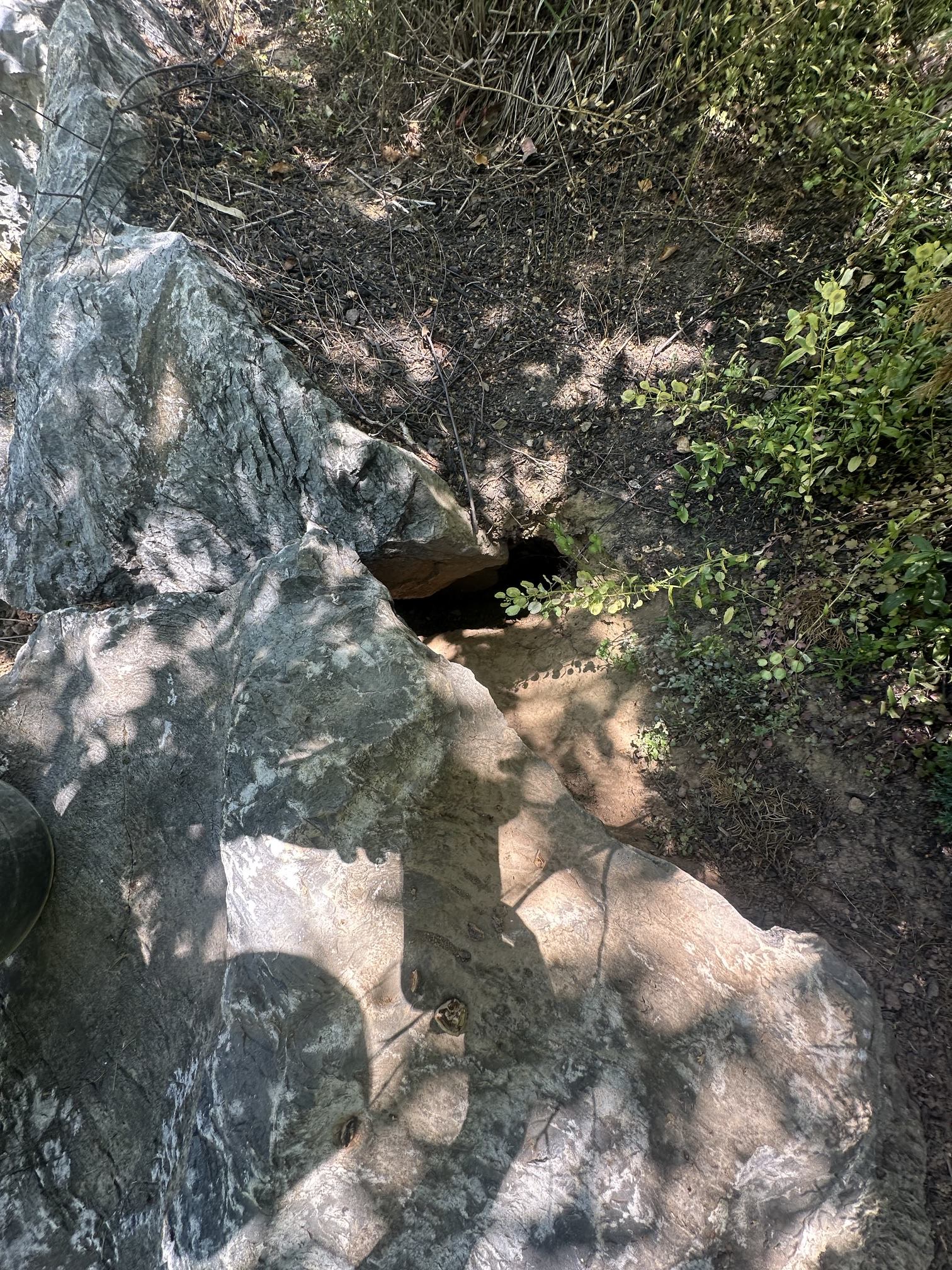
Roughly 10–12 inches across with a fan of excavated soil, usually against a shed, deck, porch, or slab: groundhog. Look for the hidden secondary "plunge holes" with no dirt pile — there are almost always one to four. See groundhogs.
Dozens of small, neat, cone-shaped holes appearing overnight: skunks (or raccoons) digging for grubs. The animal is the symptom — the grubs are the cause, and treating those is what stops the digging. See grub damage.
Turf peeled up in sheets rather than dug in spots: raccoons, working a heavy grub population. They're strong enough to roll sod, which skunks generally aren't.
Forceful damage with a large opening: raccoon. A neatly gnawed round hole with chewed wood edges: squirrel. A gap you'd never notice, with dark greasy staining around it: bats.
Dark, tubular, blunt-ended with visible seeds or berry bits: raccoon (never handle these — roundworm risk). Small, dark, and crumbling to a glittery dust of insect wings: bats. Firm and solid: rodents. Photograph rather than sweep, and text it to us.
The obvious one for skunk, but also a strong ammonia smell in a room below the attic (bats or accumulated urine), or a sweet rotten smell in a wall — which usually means dead animal removal, not a live one.
These are the animals we're licensed to handle, under our Pennsylvania Game Commission Nuisance Wildlife Control Operator certification — a separate license from pest control that most exterminators don't carry. Each one has its own rules about timing, handling, and what can legally be done, which is the real reason this isn't a DIY job even when it looks like one.
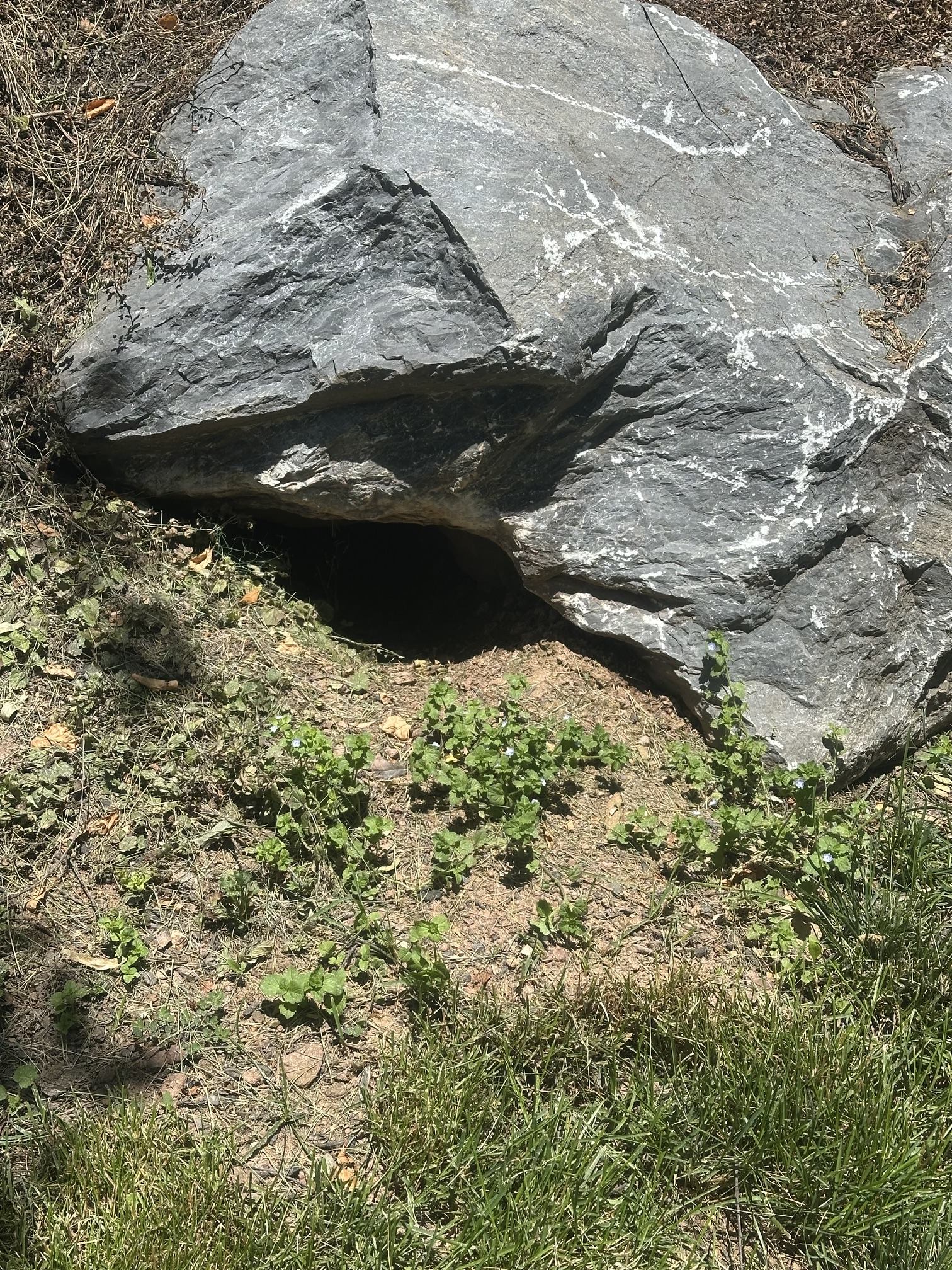
Burrows under structures, eats gardens, undermines slabs and shed pads. A rabies vector species in PA. The most common structural-damage wildlife call we get. Groundhog removal →
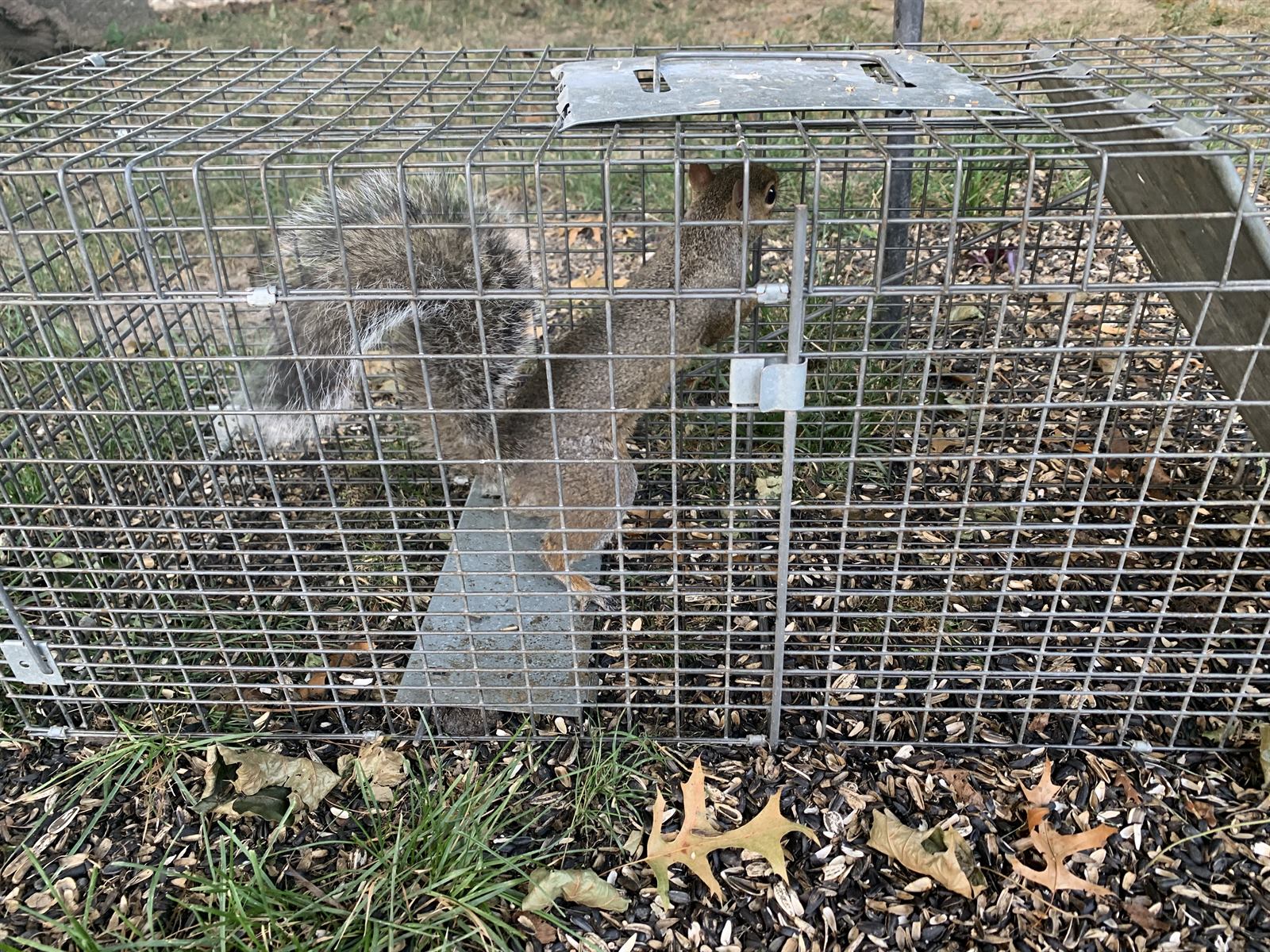
Attics, soffits, chimneys, and gable vents. Constant gnawing means chewed wiring — a documented attic fire risk. Two litters a year here. Squirrel removal →
Attics, chimneys, and under decks; females with kits are the classic spring call. Strong, dexterous, and destructive. Rabies vector species, and their droppings carry roundworm — this is not a DIY animal. Wildlife services →
Dens under decks, sheds, porches, and crawl spaces. Grub-digging in lawns. Rabies vector species, and removal takes technique for reasons that need no explanation. Wildlife services →
Under decks and in crawl spaces, garages, and outbuildings. Slow, generally harmless, and famously good at eating ticks — but not something you want denning under the porch. Wildlife services →
Attics, soffits, wall voids, and behind shutters. Protected in Pennsylvania — exclusion only, never extermination, with legal timing restrictions during maternity season. Bat exclusion →
Basements, crawl spaces, garages, and around foundations. We identify the species and remove safely. Pennsylvania does have venomous species (timber rattlesnake, copperhead) — if there's any chance that's what you're looking at, don't approach it. Wildlife services →
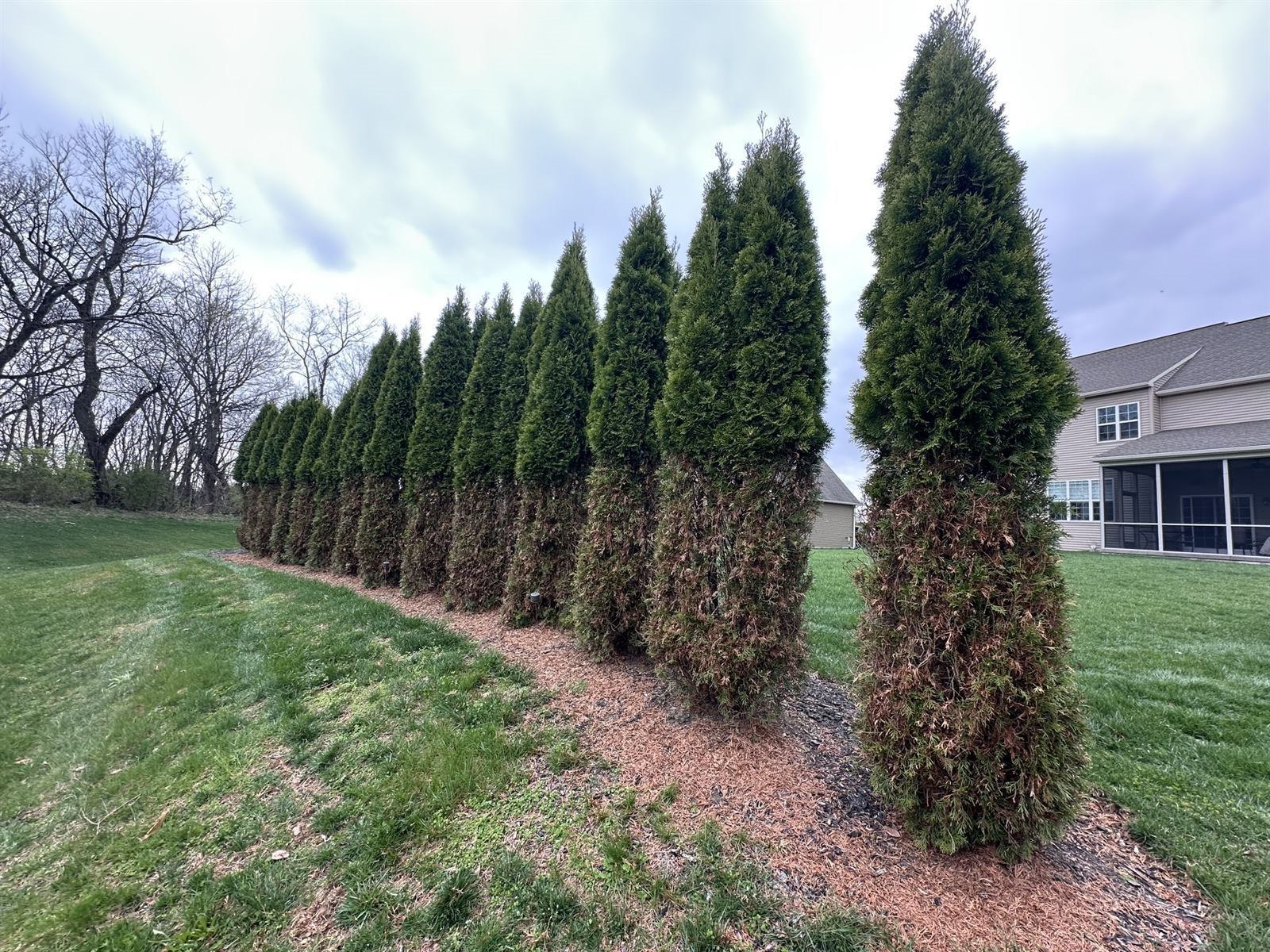
Not removal — a browse problem. Ragged torn stems (deer have no upper front teeth) and a clear browse line on arborvitae, yews, and hostas, worst in winter. Deer damage →
We would rather save you a phone call than take one we can't help with. These come up constantly, so here's the straight answer on each.
Rodent control isn't part of our service mix. If nighttime skittering and firm dark droppings point to rodents, you'll want a pest control company that specializes in them. We'll tell you honestly if that's what your sign indicates.
Also not a service we offer — call a specialist.
Not exterminated here, ever. Colonies in walls, soffits, and chimneys are removed alive by our family apiary and relocated to working hives. Honey bee removal →
These we absolutely do handle — including nests inside walls, soffits, and attics, which is nest removal rather than routine interior spraying. Yellow jacket removal →
We serve Dauphin, Cumberland, Lebanon, Perry, York, and Lancaster Counties — including:
Harrisburg, Paxtang, Penbrook, Steelton, Highspire, Middletown, Hummelstown, Hershey, Palmyra, Annville, Cleona, Lebanon, Grantville, Linglestown, Colonial Park, Susquehanna Township, Lower Paxton, Camp Hill, Mechanicsburg, Lemoyne, New Cumberland, Wormleysburg, Enola, Marysville, Halifax, Millersburg, Elizabethtown, Mount Joy, Mount Wolf, Manchester, Dillsburg, Carlisle, Boiling Springs, and surrounding Central PA communities.
Text a photo to 717-379-3248 for a free ID. PA-certified Nuisance Wildlife Control Operator serving Harrisburg and Central PA.
Call or Text 717-379-3248