
Same-day emergency removal of yellow jacket, bald-faced hornet, and European hornet nests across Harrisburg and Dauphin County. Ground nests, soffit nests, aerial nests, and the dangerous in-wall colonies. Licensed PA pesticide applicator — no risky DIY, no spray-and-pray.
Same-Day Removal — Call or Text 717-379-3248Yellow jackets aren't bees, aren't paper wasps, and aren't hornets — though Central PA gets all three at various points in the summer. They're aggressive, build hidden nests of 1,000 to 5,000+ workers by late summer, and they get more defensive the closer you get to peak season (August through early October). Multiple stings are routine when a nest is disturbed.
The two most dangerous Harrisburg patterns: ground nests in lawns or under brick patios (you discover them by mowing or stepping on them) and in-wall colonies in soffits or attic spaces of older Harrisburg homes (Bellevue Park, Boas Heights, Allison Hill) where they've been building for months without notice. Both need a licensed applicator. Both have sent people to the ER when treated wrong with hardware-store spray.
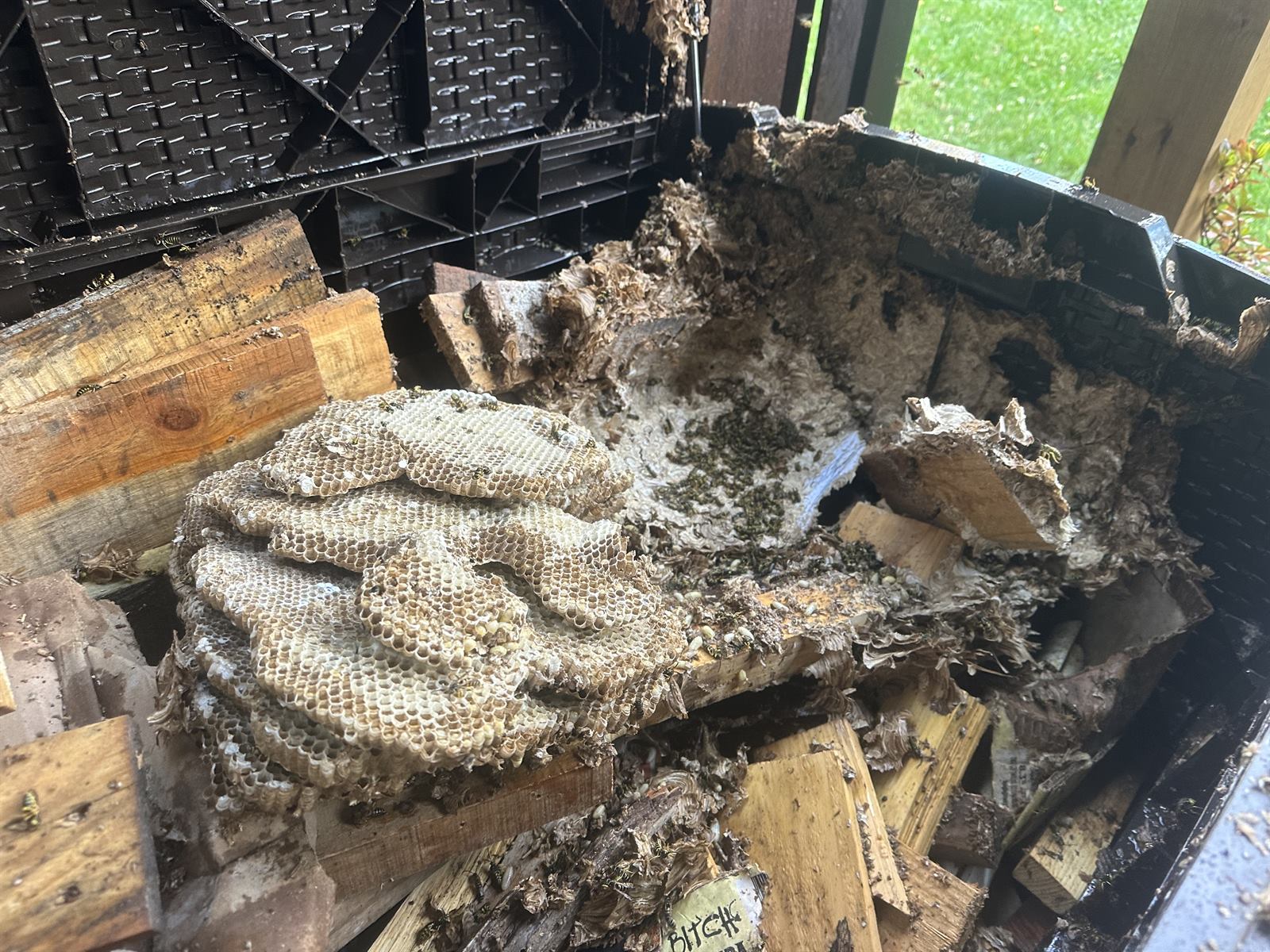
The classic late-summer Harrisburg yard call, and one we handle during the day — dust puffed deep into the entry hole, or the nest dug out where that's the better call. Then we flag the spot for 48 hours. Mowing-discovered nests are the most common, and we respond same-day.
Not sure what's in that hole? See ground bees in your yard — how to tell yellow jackets from harmless mining bees.
Older Harrisburg housing stock (1900s through 1960s) is full of small soffit gaps and pipe penetrations that become yellow jacket entries. Treatment goes through the entrance; we don't open the structure unless absolutely necessary, or unless you've asked for pesticide-free removal.
Nest in the siding or a wall void? See wasps in your siding or wall — and don't seal the hole first.
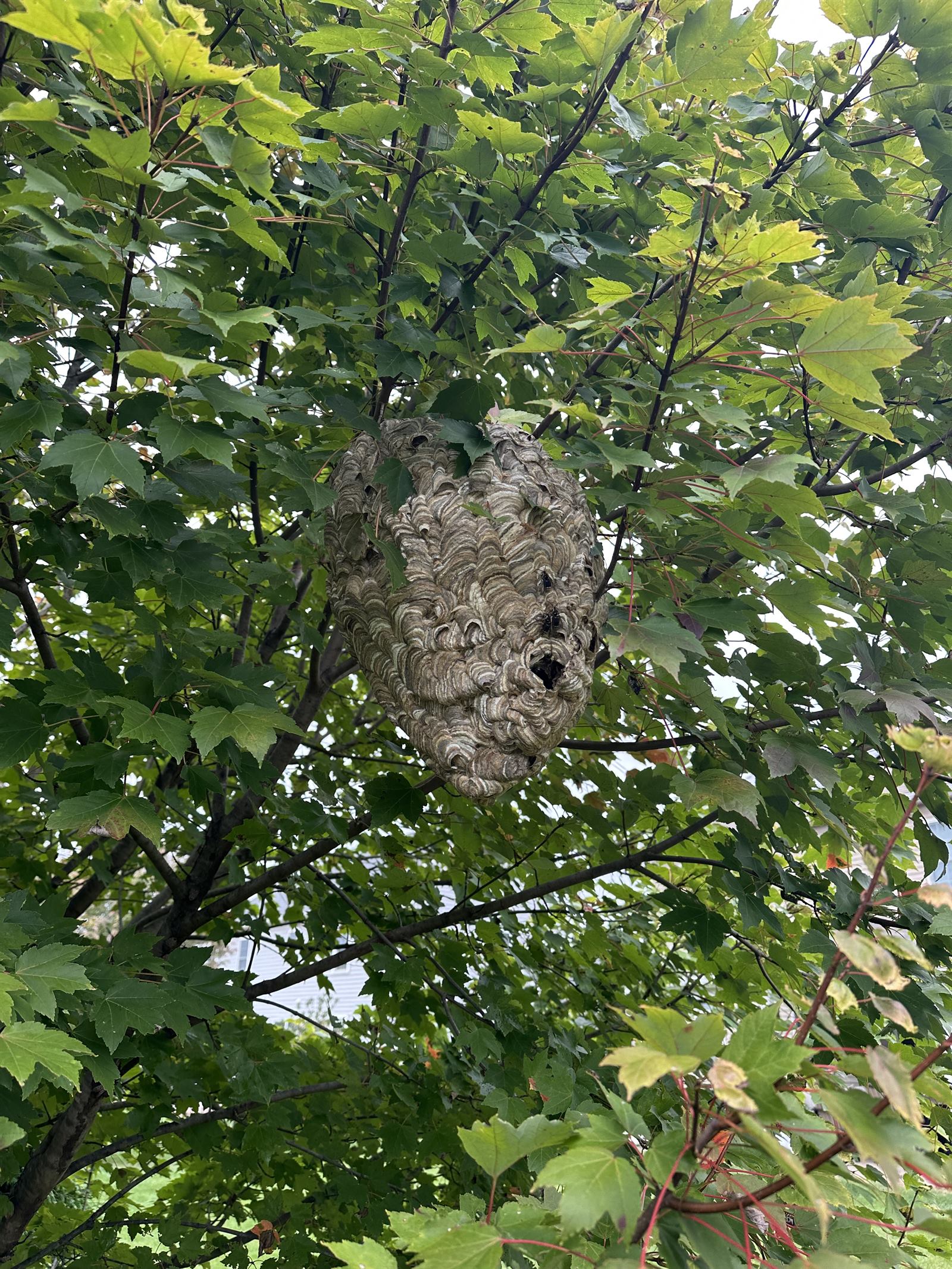
Football-to-basketball sized gray papery nests hanging in the open — a tree branch, a dense shrub, a porch ceiling. Height varies a lot: plenty sit four feet off the ground, some need a ladder. Full protective suit and direct injection either way, and where it can be taken down safely the nest leaves with us. These are the straightforward ones — visible, reachable, usually done in a single visit — which is why they cost less than a nest hidden in a soffit or wall void.
Big (1+ inch), buzzing, often in tree cavities, soffits, or sheds. Active at dusk and into the night — often misidentified as something exotic. Same treatment approach as bald-faced hornet.
The small open-comb nests under porch ceilings, in soffit corners, behind shutters. Less aggressive than yellow jackets but you don't want them where kids play. Easy treatment, often handled on a regular pest visit.
About 1 in 3 "yellow jacket" calls turns out to be honey bees. We identify before treating — honey bees get live removal, not extermination. Text us a photo at 717-379-3248 before we come out if you can.
A colony in August is 2,000–5,000 workers and, if it's in a wall, takes 14 to 21 days to fully control because of the brood still waiting to hatch. The same nest in June is a queen and a few dozen workers. If you notice traffic going into a gap early in the summer, that's the cheap version of this job.
Further back still: overwintered queens come out in April and May on their own, looking for a soffit corner, a gap behind siding, or an old rodent burrow to start in. A perimeter treatment on those surfaces through the spring makes your house a poor candidate, and a queen that nests somewhere else is a nest you never pay to remove. On properties that get one every year, that's what breaks the pattern — see stinging insects and perimeter pest control.
All of the City of Harrisburg (17101–17104, 17109, 17110) — Midtown, Allison Hill, Uptown, Bellevue Park, Boas Heights, Italian Lake. Inner suburbs: Penbrook, Paxtang, Steelton, Highspire. Outer suburbs: Colonial Park, Lower Paxton, Susquehanna Township, Linglestown.
Locally owned. PA-licensed pesticide applicator. Fully insured. Text a photo first if you can. Serving the City of Harrisburg, Penbrook, Paxtang, Colonial Park, Lower Paxton, Susquehanna Township, and all of Dauphin County.
Call or Text 717-379-3248