A mature tree is the most expensive thing in your landscape and the one thing you can't replace in a weekend. So when the needles brown or the leaves spot, the useful question isn't which spray — it's what's actually wrong. A fair share of what we get called out for can't be sprayed at all: planting depth, girdling roots, drought, deer. We diagnose first, then tell you straight what's worth doing.
PA Licensed Pesticide Applicator Since 20058 License CategoriesPA Certified NWCOFully InsuredWorking BeekeeperFree Estimates — No Contracts
Pollinator-First Plant Health Care
We will not spray any plant in active bloom. That's not just our preference — many of these product labels legally prohibit application to blooming plants, and the label is the law for a licensed applicator. It's also how we'd do it regardless, because Devon is a working beekeeper and our own bees forage on the same properties we treat. Anyone who sprays your flowering shrubs mid-bloom is either using something different or ignoring the label. Flowering trees and shrubs get treated before bloom, after bloom, or systemically through the soil. Never during.
About the Credential
Most arborist marketing in Central PA leads with "ISA Certified Arborist." Devon holds the legal Pennsylvania equivalent for tree and shrub treatment work: PA Pesticide Applicator Category 6 — Ornamental & Shade Tree. This is the PA Department of Agriculture certification that legally authorizes pesticide applications to trees and ornamentals, with continuing-education requirements every cycle. ISA certification covers climbing, pruning, and removal (which we don't do). Cat 6 covers diagnosis and treatment (which is what this page is about).
Why People Switch to LPP for Plant Health Care
Same applicator every visit. Devon diagnoses your specific tree or shrub problem and treats it — no rotating arborists, no handoff between estimators and applicators.
24-hour quote turnaround. Send a photo, get a call back the same business day with diagnosis and pricing.
Pollinator-safe by default. Working-beekeeper-grade timing and product selection — without compromising treatment outcomes.
No contracts. Treat one shrub, treat the whole property, or pause for a season. No annual commitment to get a quote.
Whole-Property or Selected-Plant Programs
You don't have to enroll your whole landscape. We do both:
Whole-property plant health care — comprehensive inspection of every tree and shrub on your property, with a calendar of timed treatments for the issues we identify. Best for estate lots and clients who want one phone call to keep everything healthy.
Single-plant or selected-plant treatment — got one struggling ornamental, one valuable mature tree, or three shrubs with a bagworm problem? We'll treat just those, on their own schedule. No "must enroll the whole property" upsell.
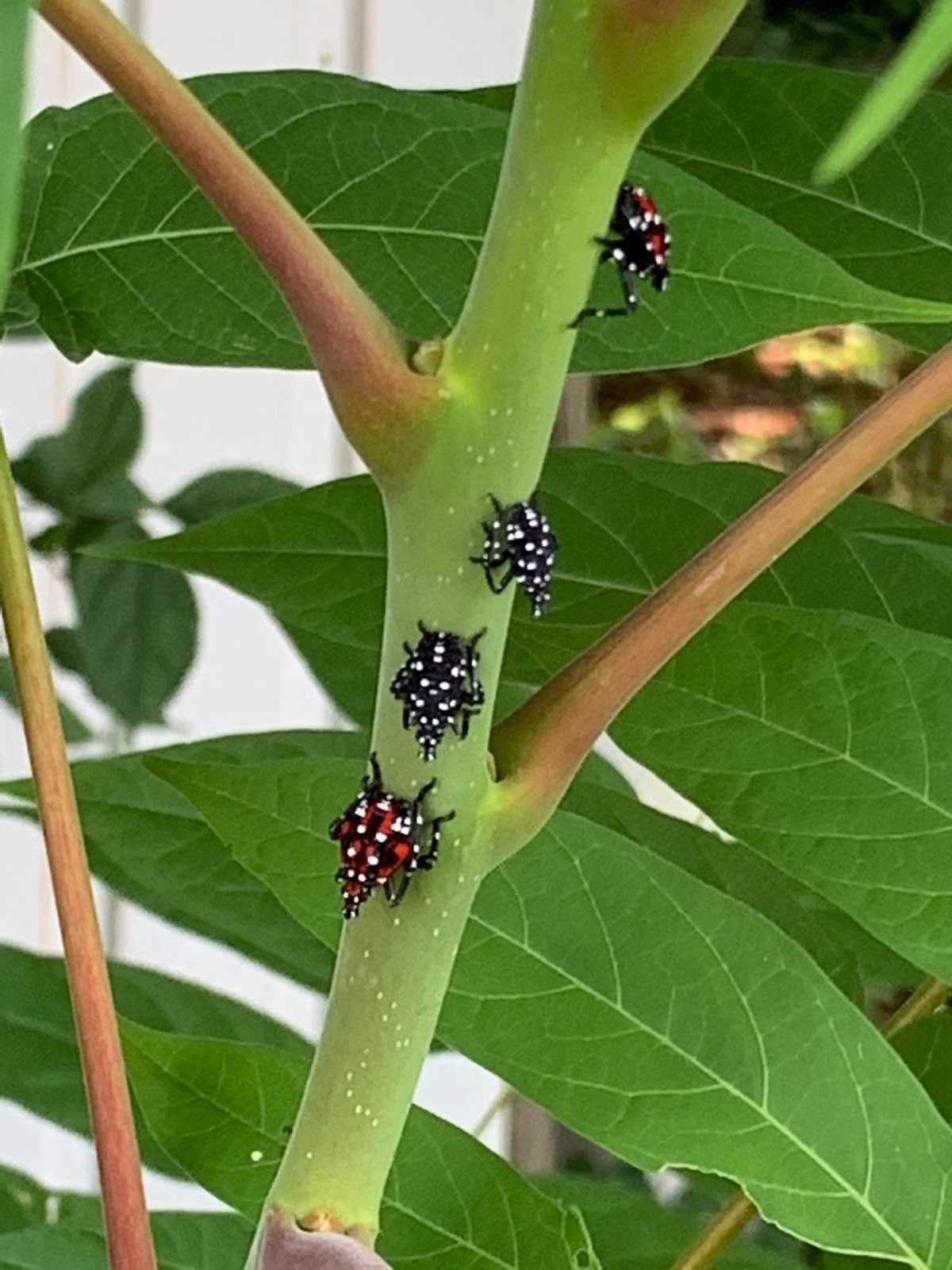
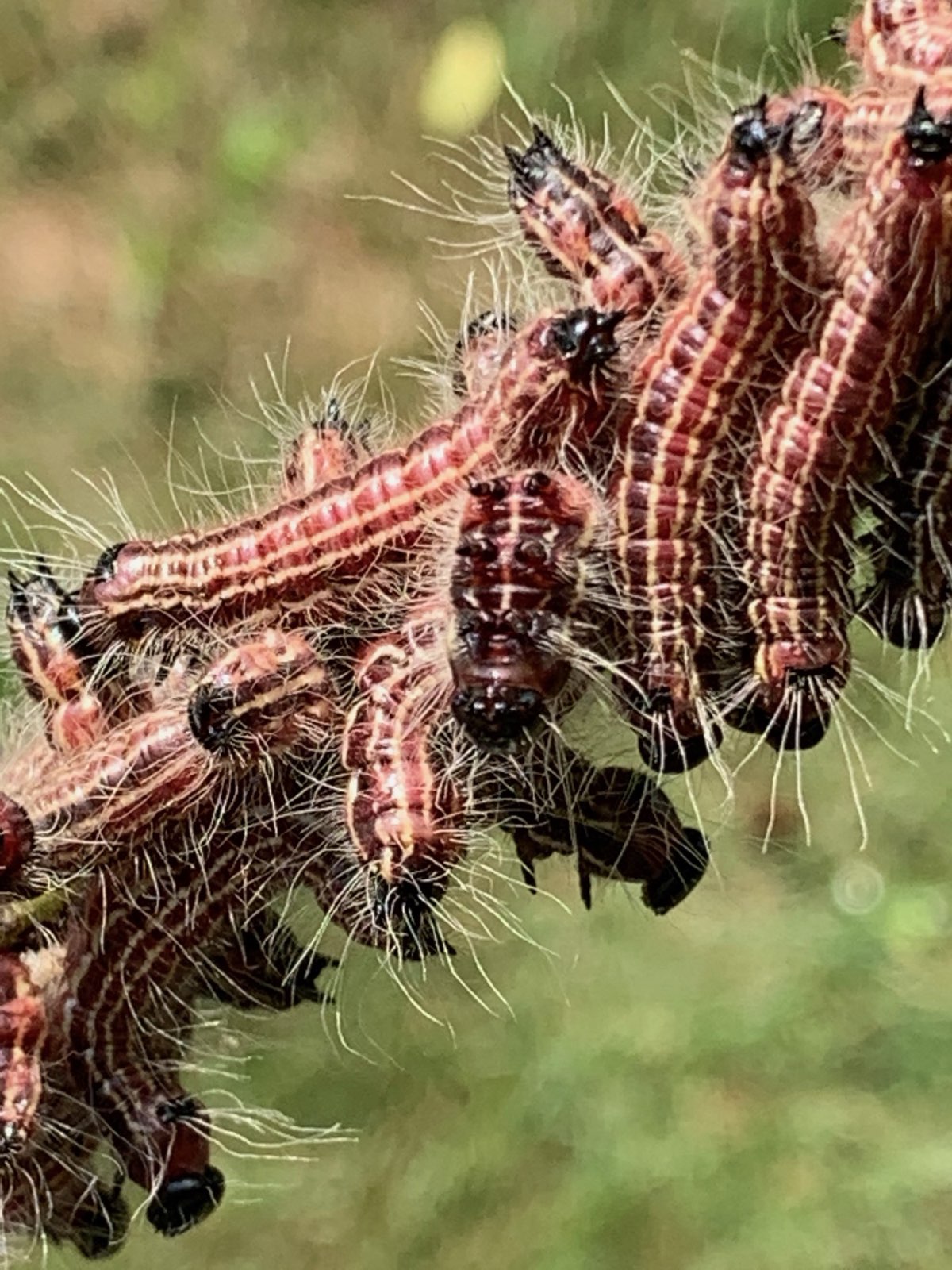
Spotted lanternfly nymphs feeding on a stem.A cluster of webworm caterpillars stripping a branch.
Why Diagnosis-First Plant Health Care Matters
Most plant problems look similar from a distance — yellowing needles, browning leaves, dropped foliage — but the right treatment depends entirely on the underlying cause. Needle cast disease and drought stress can look the same. Aphids and spider mites cause similar damage but require different products. We diagnose before we treat, so the right product goes on the right plant at the right time.
Tree & Shrub Insect Control
Targeted control for aphids, scale insects, lace bugs, leafminers, bagworms, mites, hemlock woolly adelgid, emerald ash borer, and more. We identify the specific pest and apply at the timing where it's most vulnerable.
Soil-Applied Systemic Treatments
For chronic insect issues we prefer soil drenches over trunk injections — no injection wounds, gentler on the tree's vascular system, season-long protection with minimal pollinator impact.
Disease & Fungus Treatments
Anthracnose on dogwoods, apple scab, fire blight, powdery mildew, needle cast diseases on spruces. Many fungal problems require preventative timing — once visible, the year's damage is already done.
Spotted Lanternfly Management
Soil-applied systemic treatments for preferred trees, contact treatments for active infestations, and tree of heaven removal recommendations. Treatments timed to nymph emergence and adult activity.
Root Zone Fertilization
Injects slow-release fertilizer directly into the root zone. Especially valuable for older trees, recently planted trees, and any tree showing thin canopy or poor leaf color.
Foliar Fertilization
Liquid nutrient application directly to the leaf surface. Fast uptake for trees and shrubs showing acute nutrient deficiency, transplant shock, or summer stress. Useful between regular feedings when a plant needs a quick boost.
Dormant Oil Applications
Applied in late winter while plants are dormant, dormant oil smothers overwintering insect eggs — scale insects, mites, aphids. One of the most effective and lowest-impact treatments available.
Organic Plant Health Care (Neem Oil-Based)
For clients who want zero synthetics. Neem oil acts as an antifeedant, repellent, and fungicide against many soft-bodied insects (aphids, mites, whiteflies, scale crawlers) and against powdery mildew and rust. Effective when timed correctly. We'll set realistic expectations vs the synthetic options.
Landscape Bed Weed Control
Pre-emergent and selective post-emergent treatment of mulched beds, foundation plantings, and ornamental beds — kills the weeds without damaging your shrubs, perennials, or trees. Pre-emergent applied in early spring stops crabgrass, chickweed, spurge, and oxalis before they germinate; selective post-emergent handles what slips through. Cleaner beds, less hand-pulling, mulch lasts longer.
Microscopic predatory nematodes applied to the soil — they hunt down and kill soil-dwelling insect larvae without touching the plant, pollinators, pets, or earthworms. Effective on black vine weevil (rhododendron, azalea, yew, hosta), root weevils, fungus gnats in outdoor containers, peachtree borer, and dogwood borer larvae. Soil temps and moisture have to be right, so we time applications carefully — done right, it's one of the cleanest biological controls available. How beneficial nematodes work, what they control, and the honest trade-offs →
Spotted lanternfly — on tree of heaven, maples, walnuts, grape vines. Worst late summer.
Emerald ash borer — has killed most untreated ash trees in PA. Surviving ash need ongoing soil-applied protection.
Bagworms — on arborvitae, junipers, spruces. Treatment window is May to mid-June while caterpillars are small.
Hemlock woolly adelgid — on hemlocks throughout Central PA. Without treatment, hemlocks decline and die over 4–10 years.
Fire blight — on apples, pears, crabapples, serviceberries. Causes dramatic browning that looks like a torch ran through the branches.
Spruce decline (Rhizosphaera, Stigmina) — needle cast diseases on Colorado blue spruce. Treatable but requires multi-year programs.
If you're not sure what's wrong with your tree or shrub, send a photo to 717-379-3248 — we'll identify the problem and tell you whether it's something we can treat.
We serve Dauphin, Cumberland, Lebanon, Perry, York, and Lancaster Counties — including:
Harrisburg, Paxtang, Penbrook, Steelton, Highspire, Middletown, Hummelstown, Hershey, Palmyra, Annville, Cleona, Lebanon, Grantville, Linglestown, Colonial Park, Susquehanna Township, Lower Paxton, Camp Hill, Mechanicsburg, Lemoyne, New Cumberland, Wormleysburg, Enola, Marysville, Halifax, Millersburg, Elizabethtown, Mount Joy, Mount Wolf, Manchester, Dillsburg, Carlisle, Boiling Springs, and surrounding Central PA communities.
Frequently Asked Questions
Will your treatments harm bees and pollinators?
We work hard to make sure they don't. We use soil drenches instead of foliar sprays wherever possible, we choose products that target the specific pest rather than broad-spectrum kill-everything chemistry, and nothing in flower gets sprayed at all — which does mean some areas get skipped, and we'll tell you which. We're a working beekeeper — protecting pollinators isn't a marketing line, it's how we run our business.
Do you do tree pruning or tree removal?
No. We focus on treatments — insect control, disease management, fertilization, soil work, and lanternfly. For pruning, deadwood removal, or tree removal you'll need a certified arborist.
Soil drenches vs. trunk injections — what's the difference?
Trunk injections deliver product through holes drilled into the trunk — each injection wound is a permanent injury. Soil drenches apply product to the root zone, where roots take it up and distribute it through the tree. For most chronic insect issues we recommend soil drenches.
When should I worry about spotted lanternfly?
If you have tree of heaven, maples, walnuts, willows, or grape vines, you'll start seeing nymphs in May and adults from July through fall. Heavy infestations stress trees and drip honeydew that attracts wasps and mold. The most effective control is preventative — treat host trees in spring.
Get a Free Plant Health Care Estimate
Licensed Pennsylvania pesticide applicator. A working beekeeper who treats your trees with pollinators in mind. Serving Harrisburg and Central PA.