
A hole the size of a dinner plate beside your shed, a fresh dirt pile that wasn't there yesterday, and a vegetable garden that keeps getting shorter. Here's the part most people don't see coming: it was never really about the garden. That animal is hollowing out the ground under your shed, deck, or slab — and settled concrete doesn't un-settle. Trapping alone almost never ends it either, because an empty burrow just gets a new tenant.
Free Estimate — Call or Text 717-379-3248A groundhog wants a burrow with a solid roof over it. Your shed floor, deck framing, porch slab, concrete pad, or barn foundation is exactly that: a ready-made ceiling that can't cave in, with soft soil underneath and cover on all sides. That's why they'll ignore your open field and dig two feet from your foundation.
A burrow system isn't one hole. There's a main entrance (the one with the dirt pile) plus one to four hidden "plunge holes" dug from below with no spoil pile at all — escape hatches you won't spot until you step in one. The tunnels run 8 to 25 feet or more, several feet deep, with chambers along the way.
Excavated soil from under a slab, footing, or shed pad doesn't come back. Over a season or two you get settling, cracked concrete, tilted sheds, and sagging deck posts. This is the damage people underestimate, and it's the expensive one.
An adult groundhog eats a pound or more of vegetation a day. Beans, broccoli, squash, and hostas disappear overnight, and young shrubs get clipped off at the stem. They also gnaw and climb more than people expect.
Burrow openings in a field or pasture are a broken leg waiting to happen — for horses, cattle, and anyone on a mower. On farms this is a real liability, not a nuisance.
An empty burrow is prime real estate. Skunks, opossums, rats, and next spring's groundhog all move into existing tunnels. Removing the animal without closing the burrow just changes who lives there.
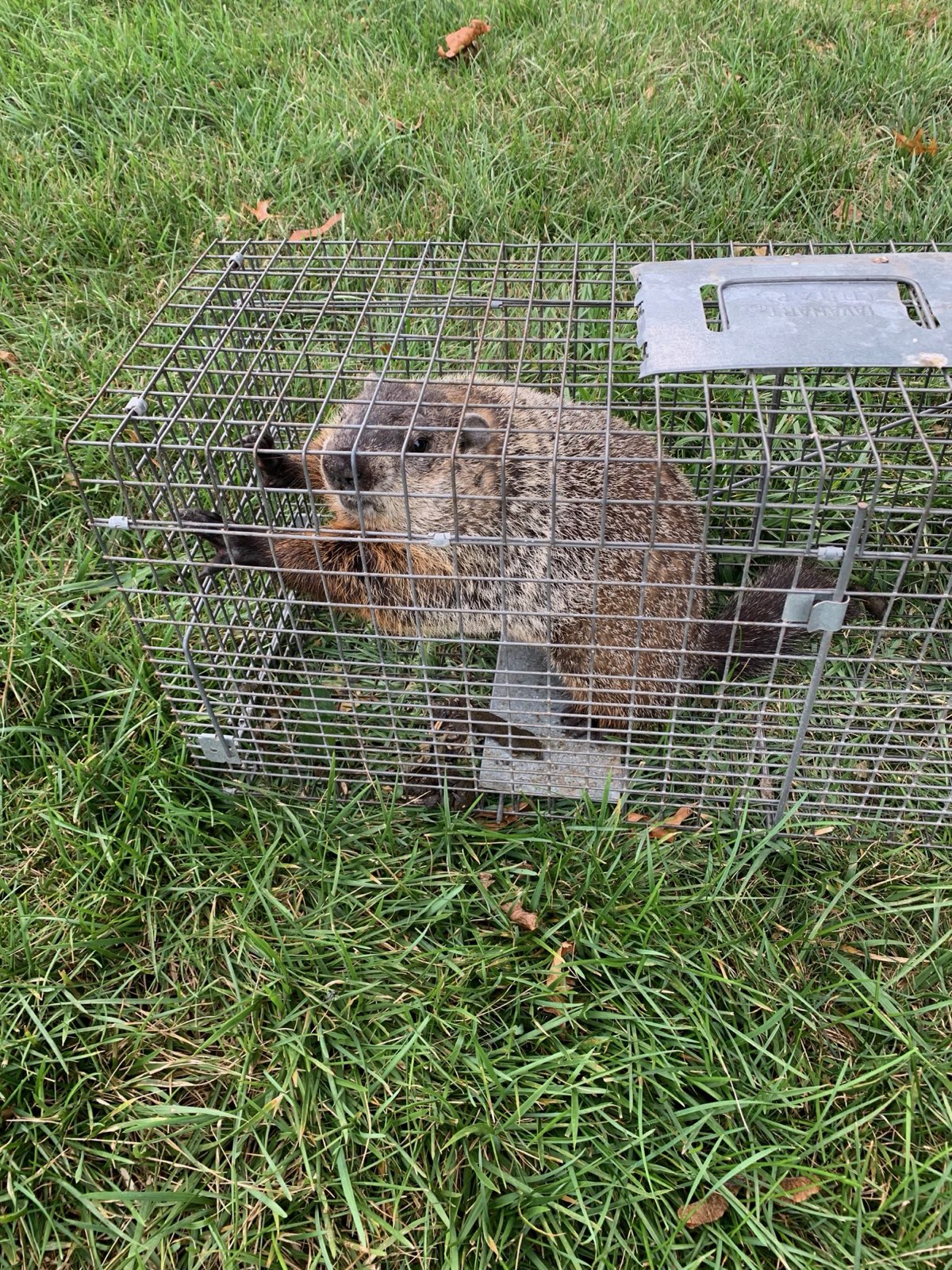
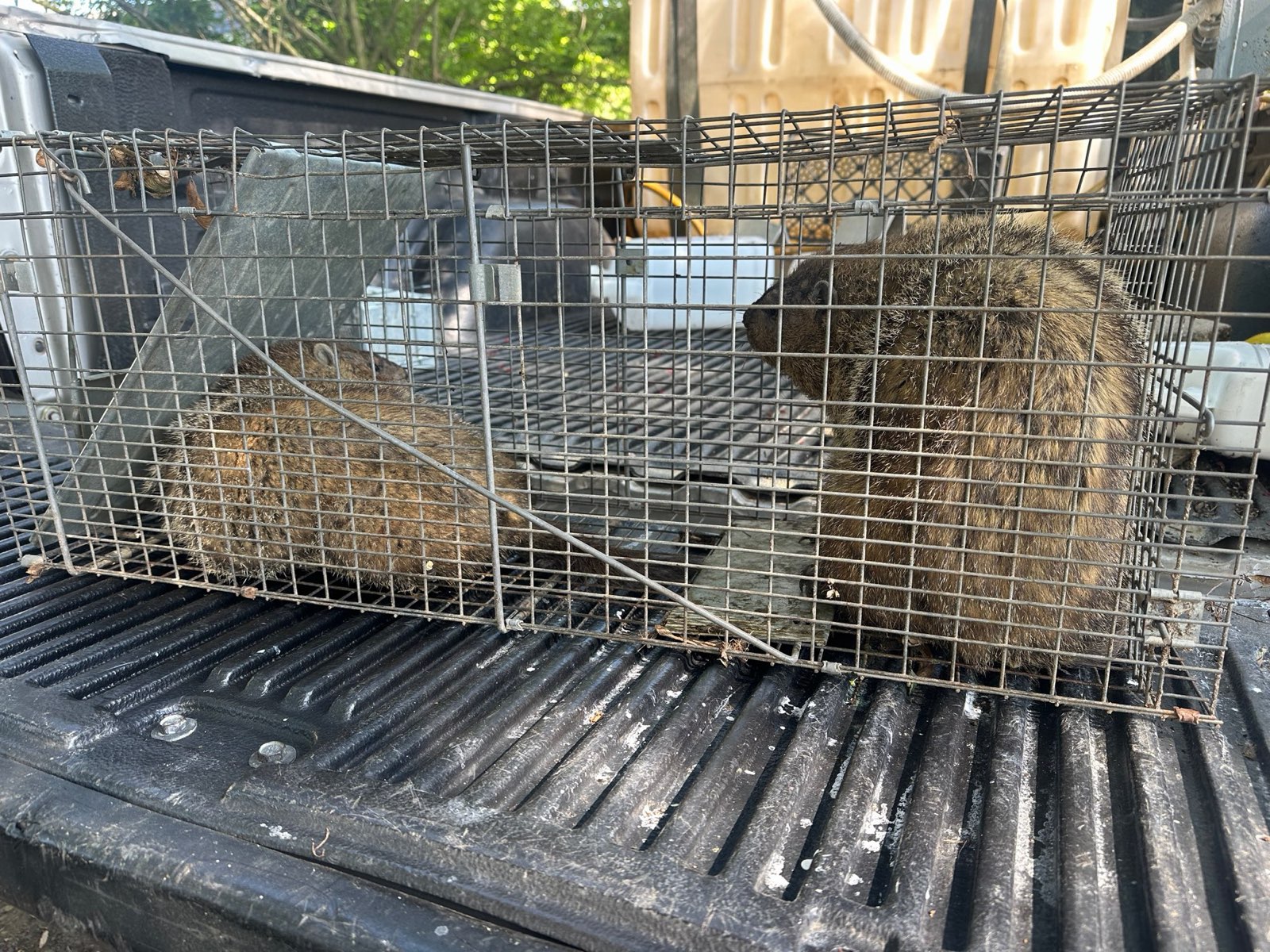
Anyone can set a trap. Making it permanent is the part that takes doing — and it's why we quote exclusion with every groundhog job instead of selling you a repeat visit next spring.
We find every entrance, including the hidden plunge holes, and determine whether it's one animal or a female with young. Timing matters: removing a mother in early summer while pups are still below ground creates a worse problem, not a solved one.
Trapping and handling is done under our PA Game Commission NWCO certification, following state rules on capture and disposition. Groundhogs are a rabies vector species in Pennsylvania — handling them is genuinely not a homeowner job.
The fix is a barrier they can't dig under: heavy galvanized mesh trenched down and bent outward in an L-footer along the shed, deck, or porch perimeter. Done right, that structure is off the market for good.
Once we're certain the system is empty, entrances get collapsed and filled so nothing else claims the tunnels — and so nobody steps in a hole.
Brush piles against the shed, gaps under the deck skirt, an unfenced garden buffet. We'll point out what's advertising your property and what's worth changing.
We serve Dauphin, Cumberland, Lebanon, Perry, York, and Lancaster Counties — including:
Harrisburg, Paxtang, Penbrook, Steelton, Highspire, Middletown, Hummelstown, Hershey, Palmyra, Annville, Cleona, Lebanon, Grantville, Linglestown, Colonial Park, Susquehanna Township, Lower Paxton, Camp Hill, Mechanicsburg, Lemoyne, New Cumberland, Wormleysburg, Enola, Marysville, Halifax, Millersburg, Elizabethtown, Mount Joy, Mount Wolf, Manchester, Dillsburg, Carlisle, Boiling Springs, and surrounding Central PA communities.
PA-certified wildlife control operator. Free on-site estimates across Harrisburg and Central PA.
Call or Text 717-379-3248