
Brown patches in August that don't recover with water are almost always grubs. Here's how to confirm it, and what works — versus what just wastes money.
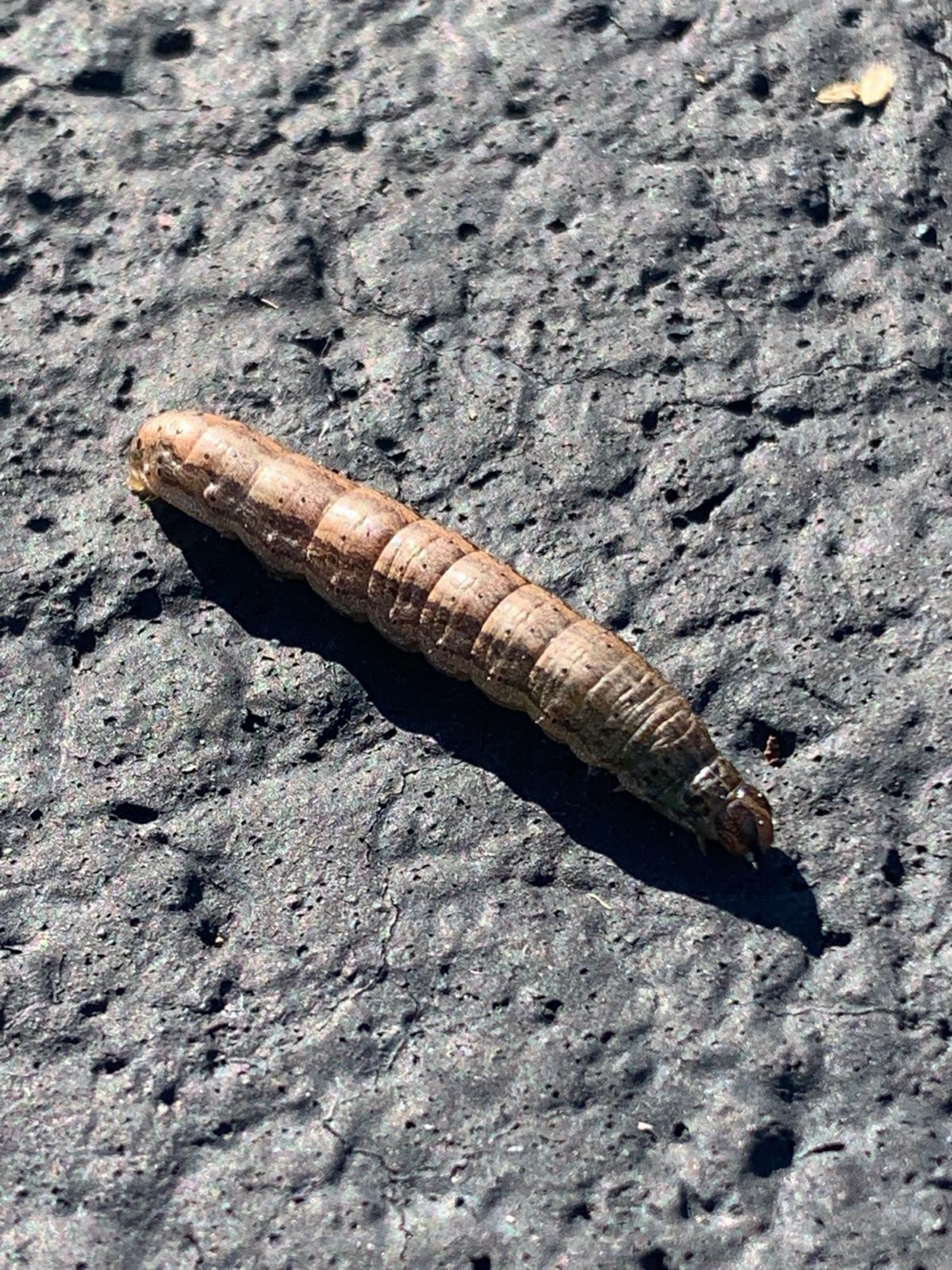
"White grub" is the catch-all term for the larval form of several beetles — Japanese beetle, masked chafer, June beetle, and Oriental beetle are the most common in Central PA. The adults lay eggs in lawns in late June through July. By mid-to-late July the larvae are actively feeding on grass roots. By August you see the damage above ground.
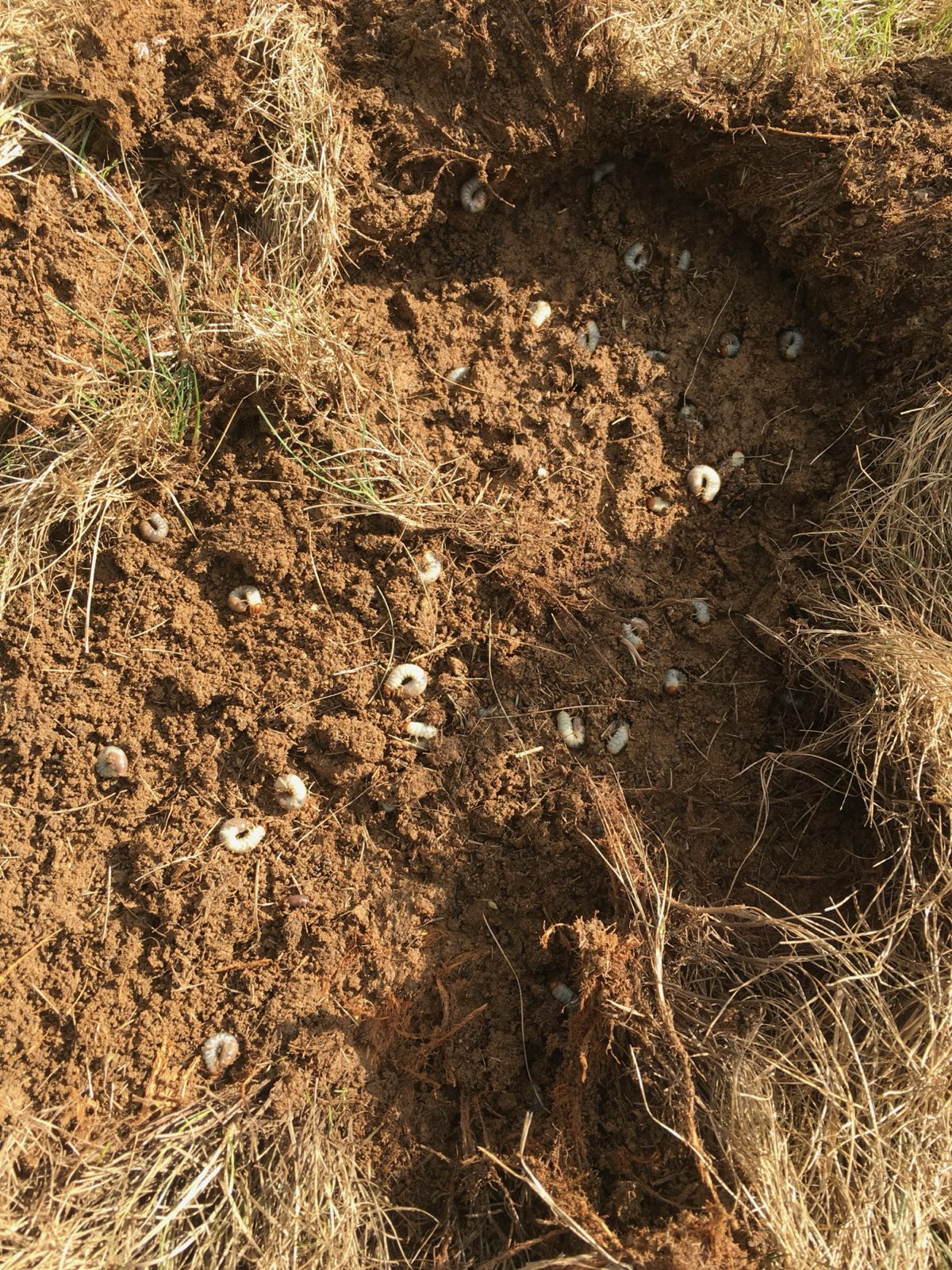
All of them look basically the same to a homeowner: a fat, C-shaped, off-white grub with a brown head and tiny legs, about ½ to 1 inch long.
This matters because the wrong diagnosis means the wrong treatment. There are two tests:
Walk to the edge of a brown spot. Grab a handful of grass and pull straight up. If the grass resists — roots intact — it's not grubs. It's drought, fungus, or chemical burn. If the grass pulls up like a piece of carpet with little or no root attached, the roots have been chewed off, and grubs are the most likely cause.
If the tug test suggests grubs, confirm it. Cut a 1-foot square with a shovel at the edge of a damaged area, 2–3 inches deep, and flip it over. Count the grubs in the soil and the underside of the sod.
This is the part most homeowners get wrong. There are two completely different treatments:
A systemic preventive goes down before the eggs hatch, moves into the root zone, and is waiting when the grubs begin feeding. This is the reliable one — the most protection for the least material, and bee-safe when applied correctly. If you had grubs last year, this is what you book for spring.
If grubs are actively destroying turf in the fall, a curative product like Dylox (trichlorfon) stops the damage and controls the grubs already in the soil. It works fast and has to be watered in immediately. This is the rescue treatment — the call we get when a lawn is peeling back in October — and it's what keeps the damage from getting worse while the repair gets planned.
If it's late August and you have dead patches, the grubs have already done what they're going to do. The right move is:
If you're not sure whether brown patches are drought, fungus, or grubs — send a photo or call 717-379-3248. We'll walk the lawn, do the count, and tell you whether treatment is actually worth it. Some lawns don't need it.
Call or text 717-379-3248. We'll tell you exactly what's wrong with your lawn and whether it needs treatment.
Call or Text 717-379-3248