Want Shrub & Tree Pest Control Without the Chemicals?
Some of the worst pests on your ornamentals aren't on the leaves at all — they're underground, eating the roots, where no spray reaches them. Beneficial nematodes are microscopic predators that live in soil and hunt those larvae directly. No synthetic insecticide, nothing that touches bees, and nothing to keep the kids or the dog off afterward.
PA Licensed Pesticide Applicator Since 2005Working BeekeeperNo Synthetic InsecticidePollinator, Pet & Earthworm SafeFree Estimates — No Contracts
What They Actually Are
Not a spray, and not a chemical. Beneficial nematodes are microscopic roundworms that occur naturally in soil, raised commercially and applied live. They move through soil moisture hunting insect larvae. When one finds a larva it enters, releases the bacteria it carries, and the insect dies within a couple of days. The nematodes then reproduce inside it and the next generation goes hunting.
That's the whole mechanism. It's predation, not poisoning — which is why they're so narrow in what they affect.
Why this matters for plant health care specifically
The pests nematodes are best at are the ones you can't spray. A root weevil larva chewing the roots off your rhododendron is six inches down in the soil — foliar sprays only ever reach the adults notching the leaves above, and the damage that actually kills the plant keeps happening underground. Nematodes go where those larvae live.
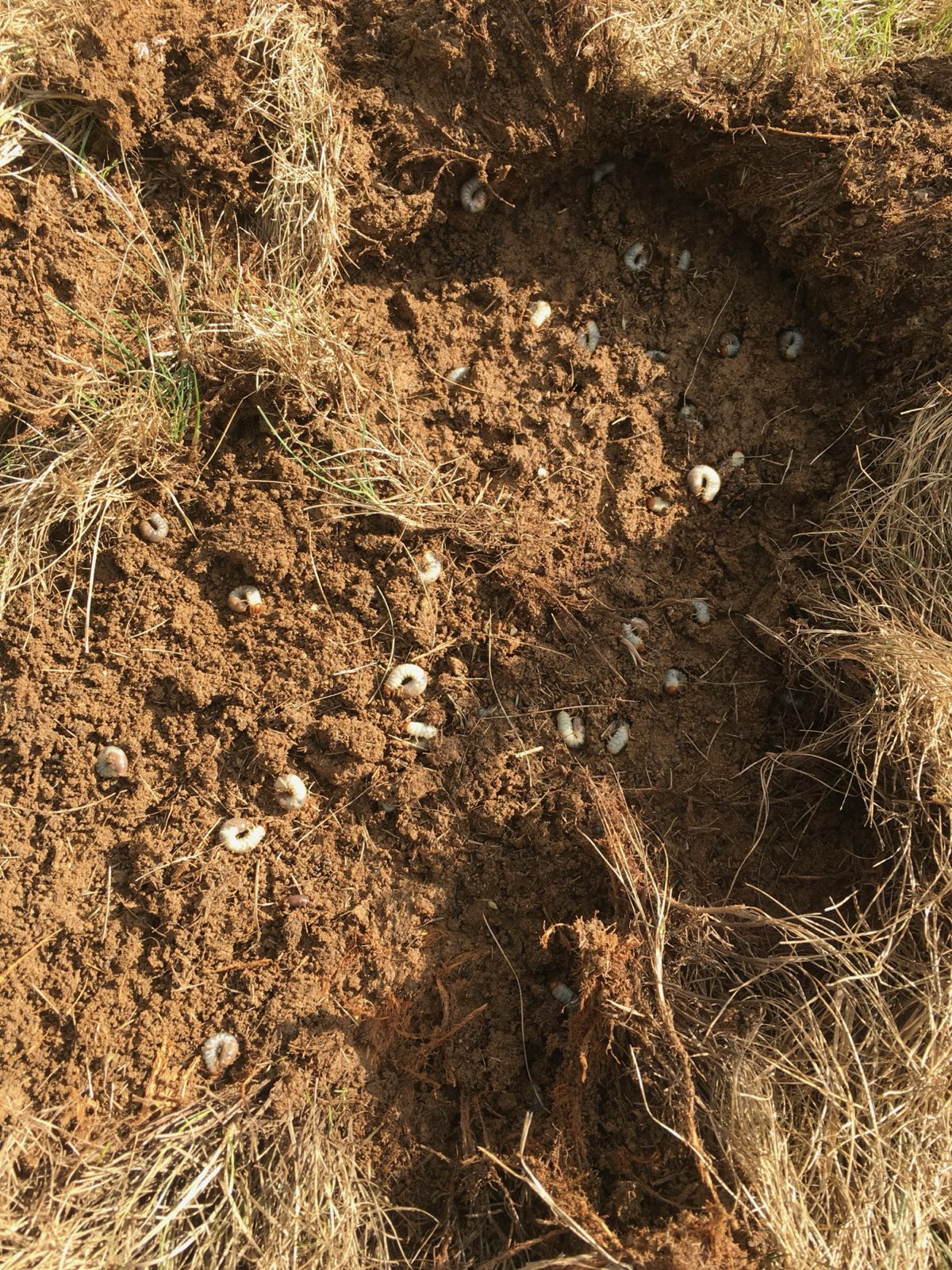
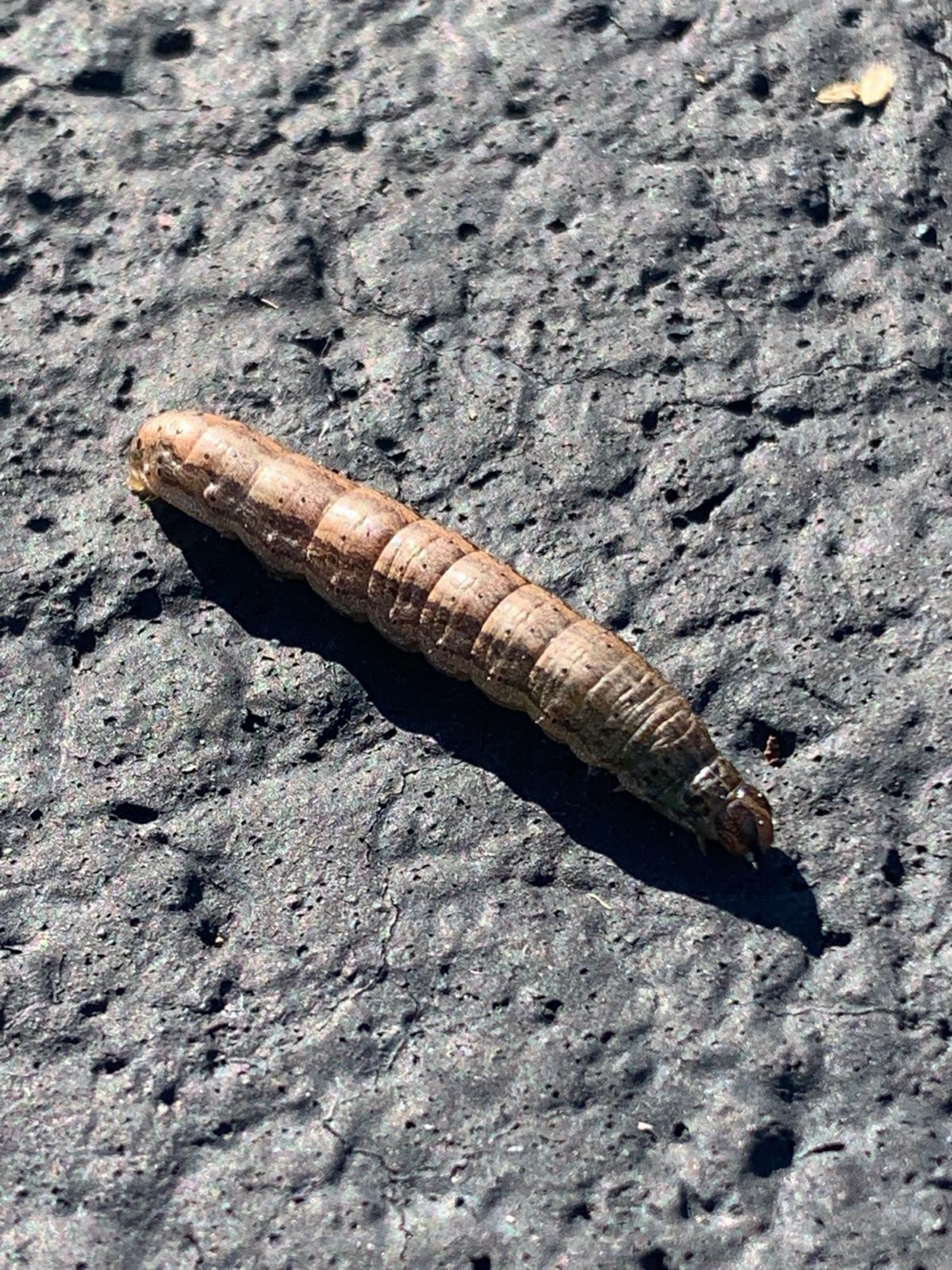
White grubs exposed in the soil under damaged turf.A cutworm larva, a common turf-feeding caterpillar.
What They Control
Different nematode species hunt differently — some cruise through soil after deeper targets, others wait near the surface. Matching the species to the pest is most of the job.
Root weevils — the main one
Black vine weevil especially, on rhododendron, azalea, yew, and hosta. The adults notch the leaf edges, which is what you notice; the larvae girdle roots underground, which is what actually kills the plant. This is the flagship use for nematodes and where they do their best work.
Borer larvae
Peachtree borer and dogwood borer, where larvae are working in the lower trunk and crown zone rather than high in the canopy. Soil and lower-trunk applications reach them.
Fungus gnats
Larvae in the soil of outdoor containers and planting beds — a common problem on patios and around foundation plantings.
White grubs
Japanese beetle, masked chafer, and June beetle larvae in turf. We do offer this, mainly inside a fully organic lawn program — but for most lawns the conventional path is a systemic preventive in May or June. See something tore my lawn up overnight.
Fleas and ticks
The larval and nymph stages in shaded ground, leaf litter, and woodline edges. Available as the tick component of an organic yard program — see mosquito & tick control.
Turf caterpillars
Sod webworm and cutworms, which feed at the soil surface and thatch line.
What they don't touch
People, pets, birds, fish, earthworms, bees, and every other pollinator. They don't harm the plant, they leave no residue, and there's no re-entry interval — nobody has to stay off afterward. That safety profile is why they're exempt from EPA pesticide registration.
Where We Use Them
On ornamentals with root weevil damage — the primary use. A soil treatment reaches the larvae without spraying the foliage, which also means nothing lands on flowers. See plant health care.
On borer-prone trees, where larvae are in the lower trunk and crown.
On properties where pollinator protection is the whole point — the default insect control when someone keeps bees, grows fruit, or has planted for pollinators. See pollinator restoration.
In a fully organic lawn program, as the grub control in place of a synthetic preventive.
Anywhere someone simply doesn't want synthetic insecticide and is willing to accept the trade-offs below.
The Honest Trade-Offs
We'd rather tell you this up front than have you disappointed later in the season.
Conditions have to be right. They need soil moisture and a soil temperature in range. Cold soil, bone-dry soil, or ground baked hard in August will waste the application. This is the single biggest reason people try them once, see nothing, and conclude they don't work.
They're alive, which means handling matters. They have a shelf life, they can't cook in a hot truck, and they need to be watered into the soil rather than left on the surface. A bag bought at a big-box store and left in a car has usually already failed before it goes down.
Judge them over a season, not a week. There's no dramatic overnight kill to look at, and the plant recovers on plant time.
On turf specifically, a synthetic preventive is usually more complete. Nematodes work on grubs, but a well-timed systemic gives higher and more predictable knockdown. On ornamentals, by contrast, nematodes are often the better tool, because the target is underground where sprays don't go.
They won't fix a plant that's failing for another reason. If your rhododendron is declining from planting depth, drainage, or winter injury, nematodes do nothing. We diagnose before we quote — see plant health care.
Getting the Timing Right
Timing is most of whether this works. Nematodes have to go in when the target larvae are actively feeding and reachable, and when soil conditions will keep them alive long enough to hunt. Root weevil and borer applications run on their own schedule rather than the turf calendar, so we time the application to the pest on your property.
Soil gets watered before and after so they move down out of the sun and into the root zone rather than sitting on top.
How It's Priced
Nematodes are sold and applied by how many you release, so the price comes down to two things: the quantity needed, and how many plants — or how much ground — that quantity has to cover. Three rhododendrons with root weevil is a very different release than a large mixed planting.
That means there's no flat rate to quote you honestly. Tell us what you've got and roughly how much of it, and we'll size the release and price it. Estimates are free — call or text 717-379-3248.
Where We Cover
All of the City of Harrisburg (17101–17104, 17109, 17110) plus Penbrook, Paxtang, Steelton, Highspire, Colonial Park, Lower Paxton, Susquehanna Township, and Linglestown. Also Hershey, Hummelstown, Mechanicsburg, Camp Hill, Palmyra, Middletown, Carlisle, and Lebanon.
Frequently Asked Questions
Something is notching the edges of my rhododendron leaves. Is that this?
Very likely black vine weevil. The adults feed at night and chew distinctive notches out of the leaf margins — that's the visible symptom. The part that matters is underground, where the larvae feed on roots and can girdle the plant. Treating the notching alone doesn't solve it, which is exactly why a soil-applied control is the right tool here.
Are these the same nematodes that damage plants?
No, and it's a fair question because the word covers both. Plant-parasitic nematodes attack roots and are a problem. Beneficial or entomopathogenic nematodes attack insect larvae and don't feed on plants at all. Different animals, opposite effect.
How much does a nematode treatment cost?
It's priced on the quantity of nematodes released and how many plants that quantity has to cover — a few shrubs is a small release, a large planting is a much bigger one. There's no flat rate we could quote you honestly without knowing the scope. Tell us what you're treating and roughly how much of it and we'll size it and price it. Estimates are free.
Can I just buy them myself?
You can, and for a couple of shrubs it's a reasonable thing to try. The two things that go wrong are handling and timing — they're a live product with a shelf life that dies in heat and sunlight, and an application made at the wrong soil temperature accomplishes nothing. If you want to try it yourself we'll tell you what to look for rather than pretend it's impossible.
Is this safe if I keep bees?
Yes — this is exactly why we offer it. Nematodes stay in the soil and have no effect on bees at any stage, and because it's a soil application nothing lands on flowers. We keep our own hives and this is the option we reach for on properties where pollinator protection is the priority. See pollinator restoration.
Will it hurt my earthworms?
No. Beneficial nematodes target insect larvae specifically. Earthworms aren't insects and aren't affected, which matters because a healthy worm population is doing real work in your soil.
What are beneficial nematodes?
Microscopic roundworms that hunt insect larvae in soil. They enter a larva, release symbiotic bacteria that kill it within a couple of days, reproduce inside it, and the next generation goes looking for more. They are a living organism rather than a chemical, and they only attack soil-dwelling insects.
What do beneficial nematodes treat on trees and shrubs?
Chiefly root weevil larvae, including black vine weevil on rhododendron, azalea, yew and hosta, plus peachtree borer and dogwood borer larvae working in the lower trunk and crown, and fungus gnat larvae in container and bed soil. These are pests living in the root zone where a foliar spray cannot reach them anyway.
Tell us you'd rather not use synthetic insecticide and we'll tell you honestly whether nematodes will do the job on your plants, what the trade-offs are, and the right window to apply. If they're the wrong tool for what you've got, we'll say that too. Licensed PA applicator since 2005, working beekeepers, fully insured.