
After a long stretch with no rain, Central PA lawns go crispy and straw-colored. The good news: most of the time they're dormant, not dead — if you know how to check and what to do next.
When it hasn't rained in weeks, the phone rings with the same worried question: "Is my whole lawn gone?" Almost always, the answer is no. Cool-season grasses have a built-in survival trick — they shut down the leaves to protect the crown. This article is about telling the difference between that protective dormancy and grass that's actually died, and knowing what to do in each case. (If you're not sure the cause is drought at all, start with why grass turns brown in July — grubs and fungus can look similar.)
Tall fescue and Kentucky bluegrass — the backbone of most Harrisburg-area lawns — evolved to survive dry summers by going dormant. The blades brown out and stop growing, but the crown (the growing point at the soil line) and the roots stay alive, waiting for water. A dead plant has lost the crown too, and no amount of water brings it back.
The whole lawn rarely dies at once. What usually happens in a drought is a mix: most of the lawn is dormant, with scattered truly-dead patches in the harshest spots — south-facing slopes, thin soil over buried rubble, strips along hot pavement, and areas that were already stressed from compaction or grubs.
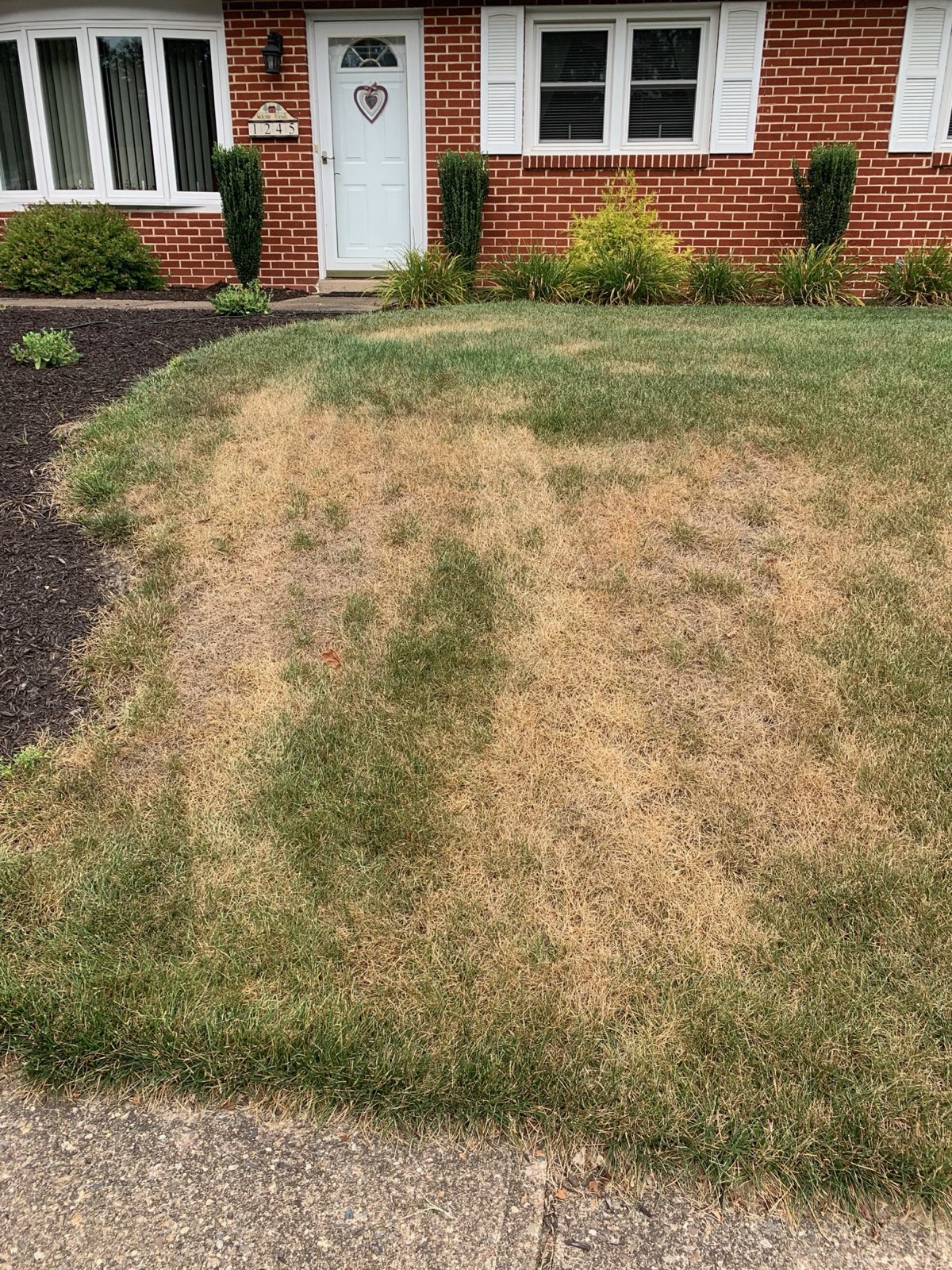
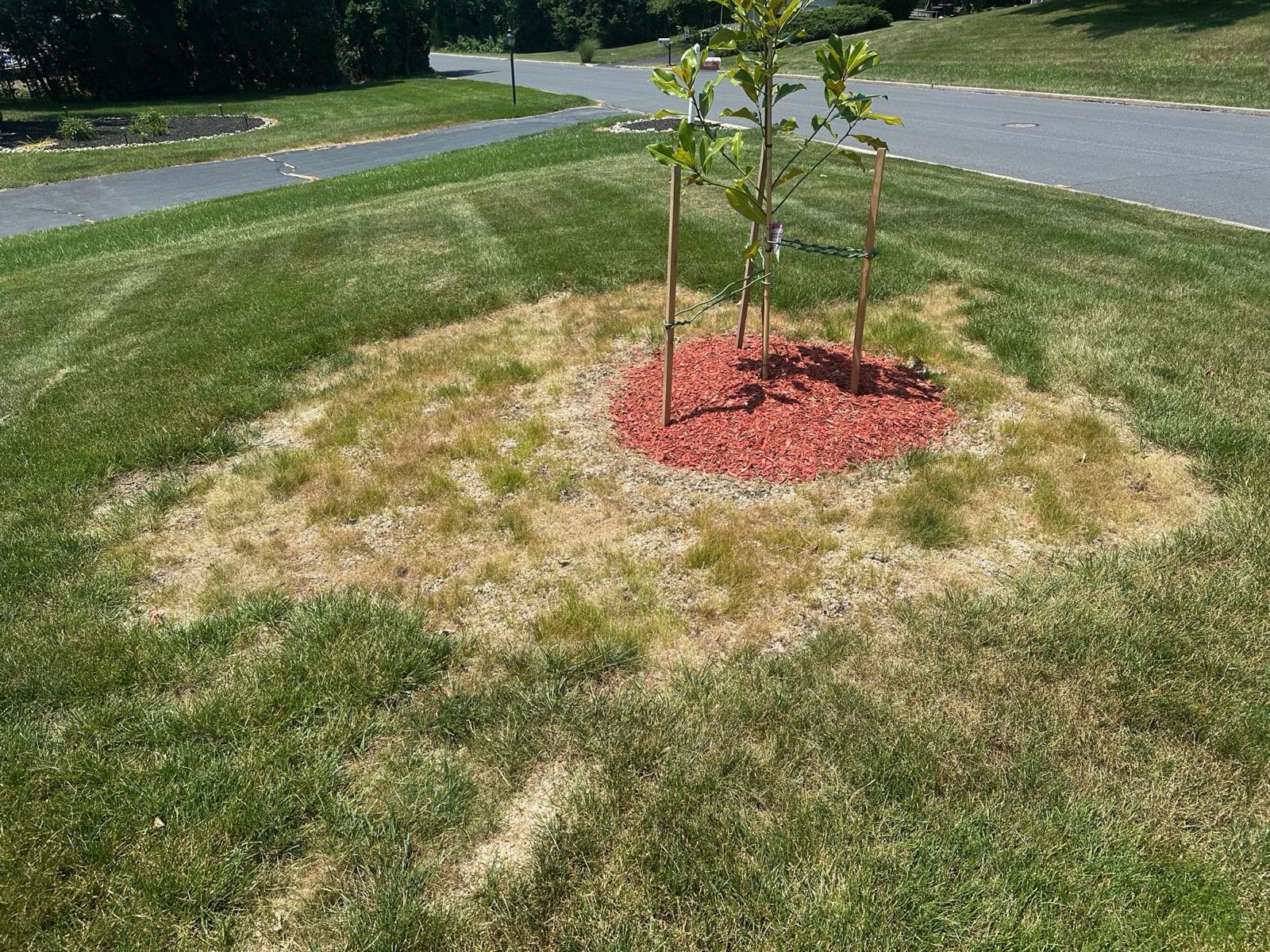
Grab a handful of brown grass and pull. If it resists and stays rooted, the crown and roots are intact — that's dormancy. If it lifts away easily with no root, that spot is either dead or has a root problem (often grubs — dig down and check for C-shaped larvae).
Part the grass at the base in a brown area and look at the crown — the small node right at the soil line where the blades emerge. A dormant plant has a crown that's still firm and slightly green or cream-colored. A dead plant's crown is brown, dry, and brittle all the way through. Check several spots; you'll usually find both.
A healthy cool-season lawn can hold dormancy through roughly 3–4 weeks of complete drought without losing the crown, and often longer. Past about 4–6 weeks bone-dry, crown loss starts and dead patches grow. That's the window that matters: a lawn that browned out two weeks ago is almost certainly fine and just waiting for rain. A lawn that's been crispy since early June is the one to watch.
You have two legitimate strategies, and both are fine — just don't flip-flop between them:
The one thing that actually causes damage is waffling — a little water every few days. That wakes the crown partway without truly hydrating it, burning through the plant's reserves. Commit to full dormancy or commit to a deep weekly soak.
When rain returns (or you decide to irrigate), a dormant lawn greens up over 10–14 days — not overnight. New growth starts from the crown, so it looks patchy and uneven at first before filling in. Resist the urge to "help" it with fertilizer or weed killer during recovery:
Once the lawn recovers, you'll see which spots stayed brown — those are the dead ones, and July is not the time to reseed them. New seed sown into summer heat rarely survives. The right move is to mark those areas and fix them in the fall renovation window, when cool soil and mild weather give seed its best shot. That's the same window we book for aeration and overseeding every year — see fall lawn renovation & overseeding in Central PA for the timing and the full process.
If you can't tell dormant from dead, or you want a second opinion before you spend money on water or seed, send a photo to 717-379-3248 or call for a free walk-through. We'll do the tug and crown checks with you, tell you honestly whether the lawn is recovering on its own, and — if there are real dead areas — put them on the schedule for fall instead of selling you a summer fix that won't take.
Call or text 717-379-3248. We'll tell you whether it's dormant or dead and what it actually needs — honest answers, no upselling.
Call or Text 717-379-3248