
Cool-season lawns in Central PA take a beating in midsummer. Drought, grubs, and fungal disease all cause brown patches — but each one needs a different response.
If your lawn was green in June and brown in July, it's almost always one of three things. Diagnosing correctly matters because the treatment for one can make another worse.
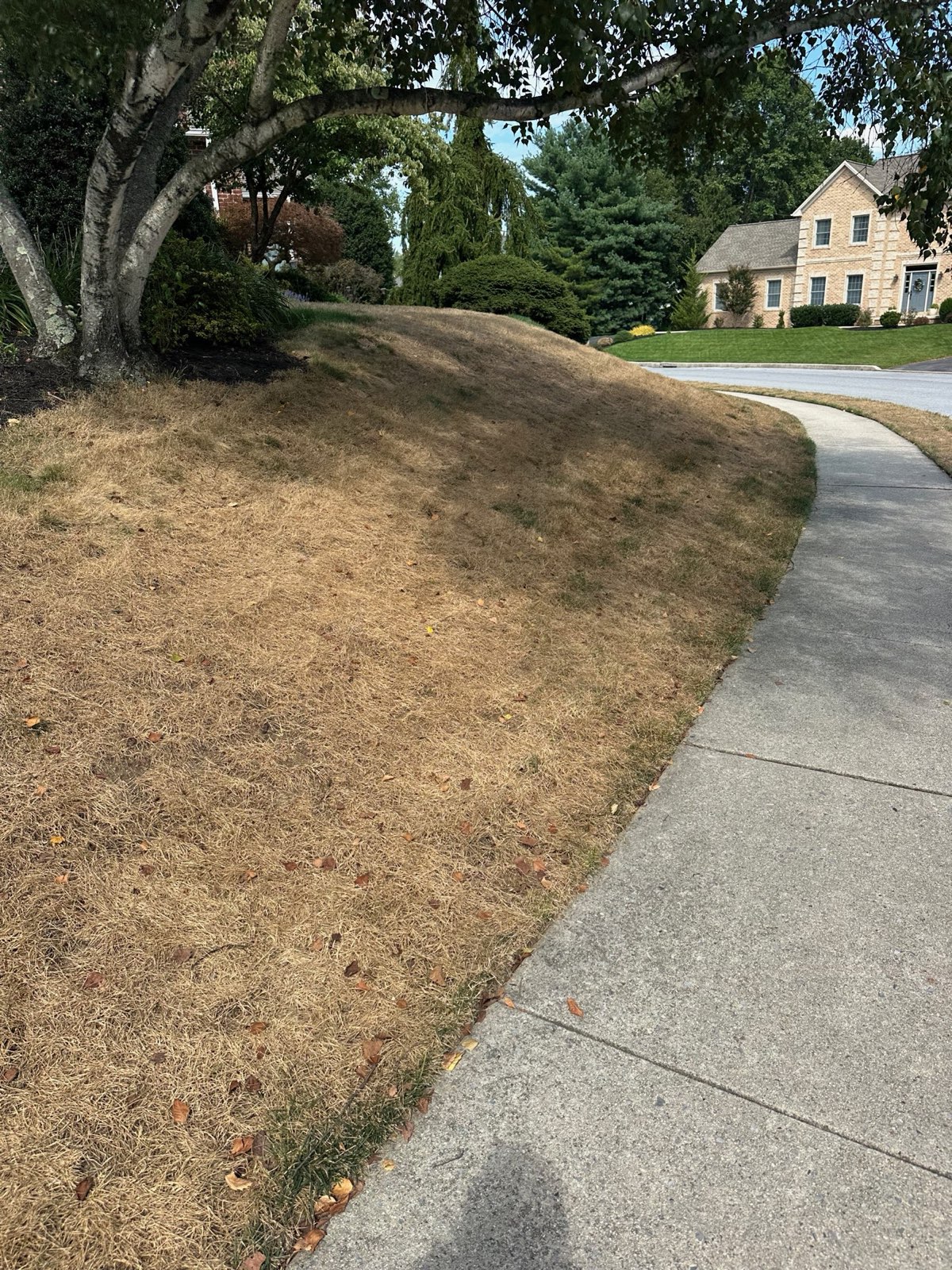
Tall fescue and Kentucky bluegrass — the two most common lawn grasses in the Harrisburg area — naturally go dormant when soil temperatures climb above 80°F and rainfall drops. The lawn turns straw-colored, the blades feel crisp, and growth stops. This is normal. The crowns stay alive even when the leaves brown out.
How to spot it: Brown is uniform across the lawn, worst on south-facing slopes and near pavement. Tug a handful of grass — it stays rooted. No insect damage visible at the soil line.
What to do: Either accept the dormancy (the lawn will green up after the next stretch of cooler, wetter weather), or water deeply once a week. 1 inch of water, applied early morning, soaks down 6 inches and keeps the crowns active. Light daily watering causes more harm than good.
Grubs — the larval form of Japanese beetles, June beetles, and masked chafers — feed on grass roots starting in midsummer. By late July you'll see irregular brown patches that look like drought but don't recover with watering.
How to spot it: Brown patches are irregular, not uniform. Tug a handful of grass — it pulls up like a piece of carpet because the roots are gone. Dig a 1-square-foot section 2–3 inches deep at the edge of a brown spot. If you find 6+ C-shaped white grubs, you have an infestation.
What to do: If grubs are actively destroying turf later in the season, a curative product like Dylox stops the damage and controls what's in the soil — that's the September and October rescue call. The right move for next year is a systemic preventive applied in May or June, before the eggs hatch. Watering brown spots doesn't help once the roots are chewed off.
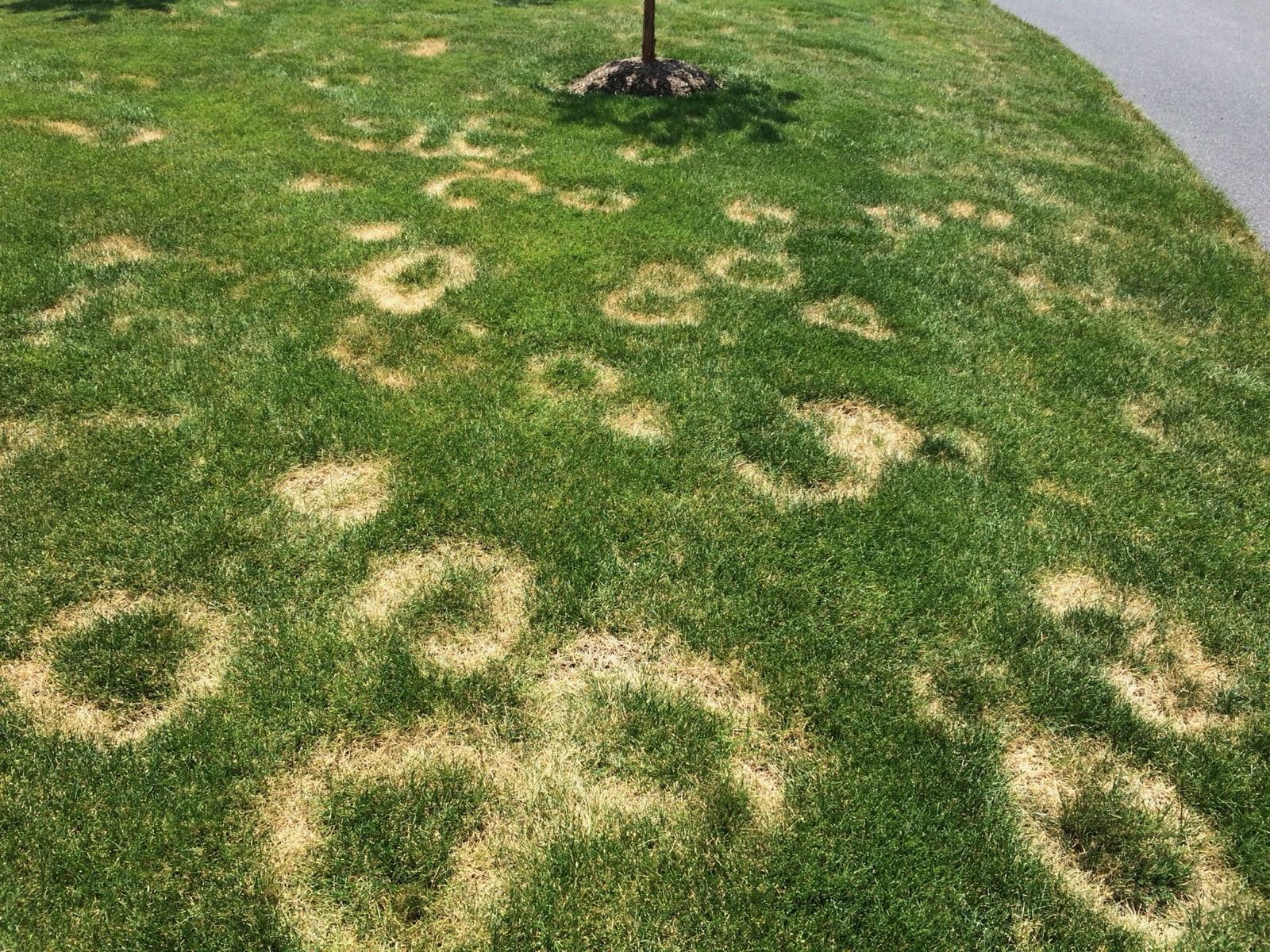
Brown patch (Rhizoctonia) and dollar spot are the two most common fungal diseases on Central PA lawns in summer. Both peak during humid stretches in the 75–90°F range — exactly our July weather.
How to spot it: Brown patch shows up as circular or irregular brown areas, often with a faint "smoke ring" at the edge in early morning. Dollar spot shows small (silver dollar-sized) bleached patches that merge into larger areas. Both are worst in lawns that got watered in the evening or fertilized heavily in spring.
What to do: Stop watering in the evening — water early morning only so the lawn dries fast. Mow higher (3.5–4 inches) to reduce stress. Fungicide treatments work but are usually only worth it on high-value lawns; for most properties, cultural changes (mowing height, watering timing, reduced nitrogen) prevent recurrence.
If you can't tell drought from grubs from fungus, send a photo to 717-379-3248 or call for a free walk-through. We'll identify the cause and tell you whether it actually needs treatment — sometimes the right answer is "wait two weeks for rain" and we'll tell you so.
Call or text 717-379-3248. We'll tell you what's wrong and whether it needs treatment — honest answers, no upselling.
Call or Text 717-379-3248