
If your lawn is thin, weedy, or recovering from summer damage, fall is when you fix it. Spring overseeding works against you — fall overseeding does the work for you.
Cool-season grasses — tall fescue, Kentucky bluegrass, perennial ryegrass — germinate best when soil is 55–70°F and the air is mild. In Central PA that happens twice a year: late March/April and mid-August through October. But spring seeding fails for three reasons:
Fall is the opposite — crabgrass is dying off, the heat is dropping, weed pressure is low, and seedlings have 6–8 weeks of cool growing weather before winter dormancy.
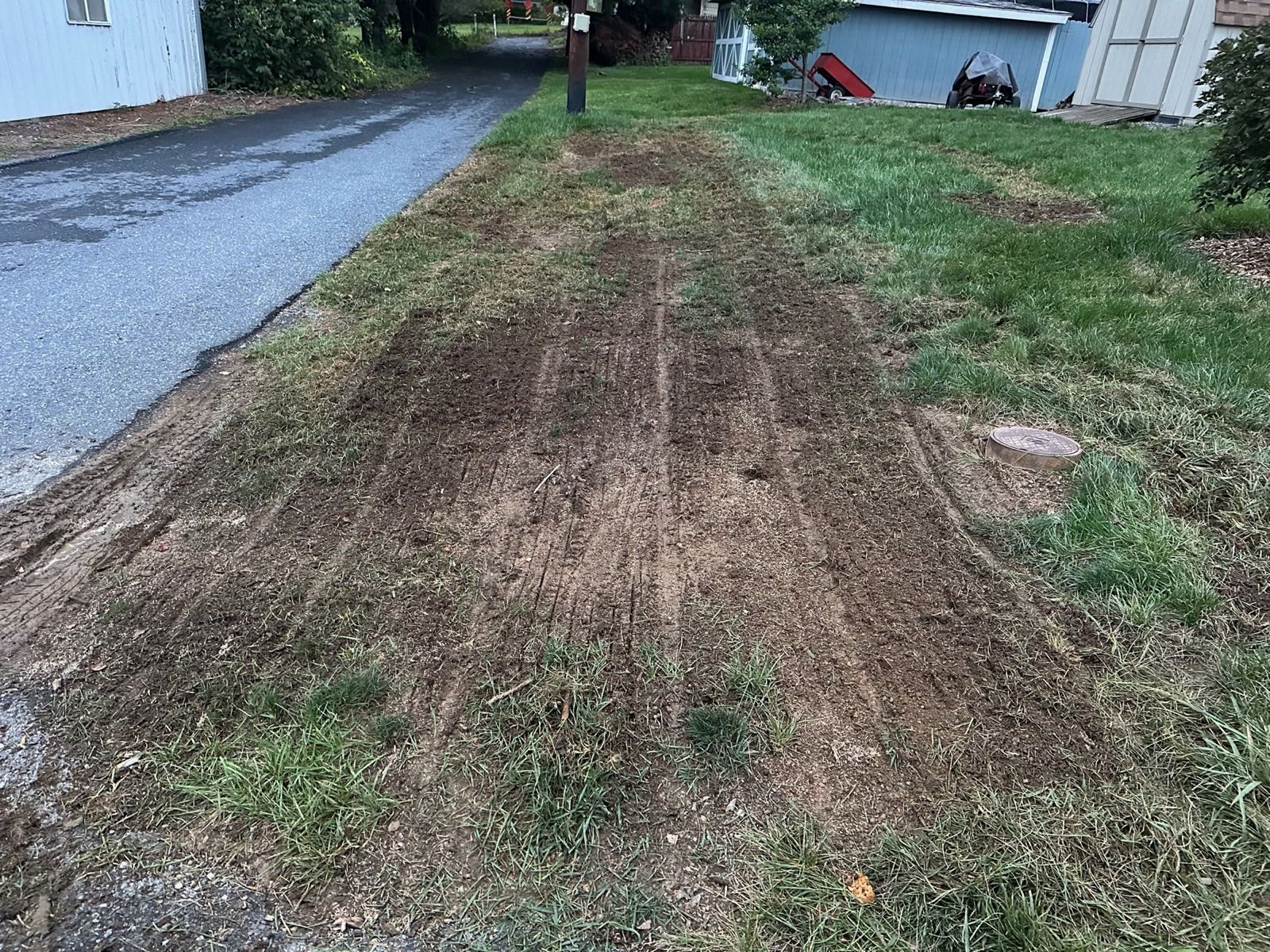
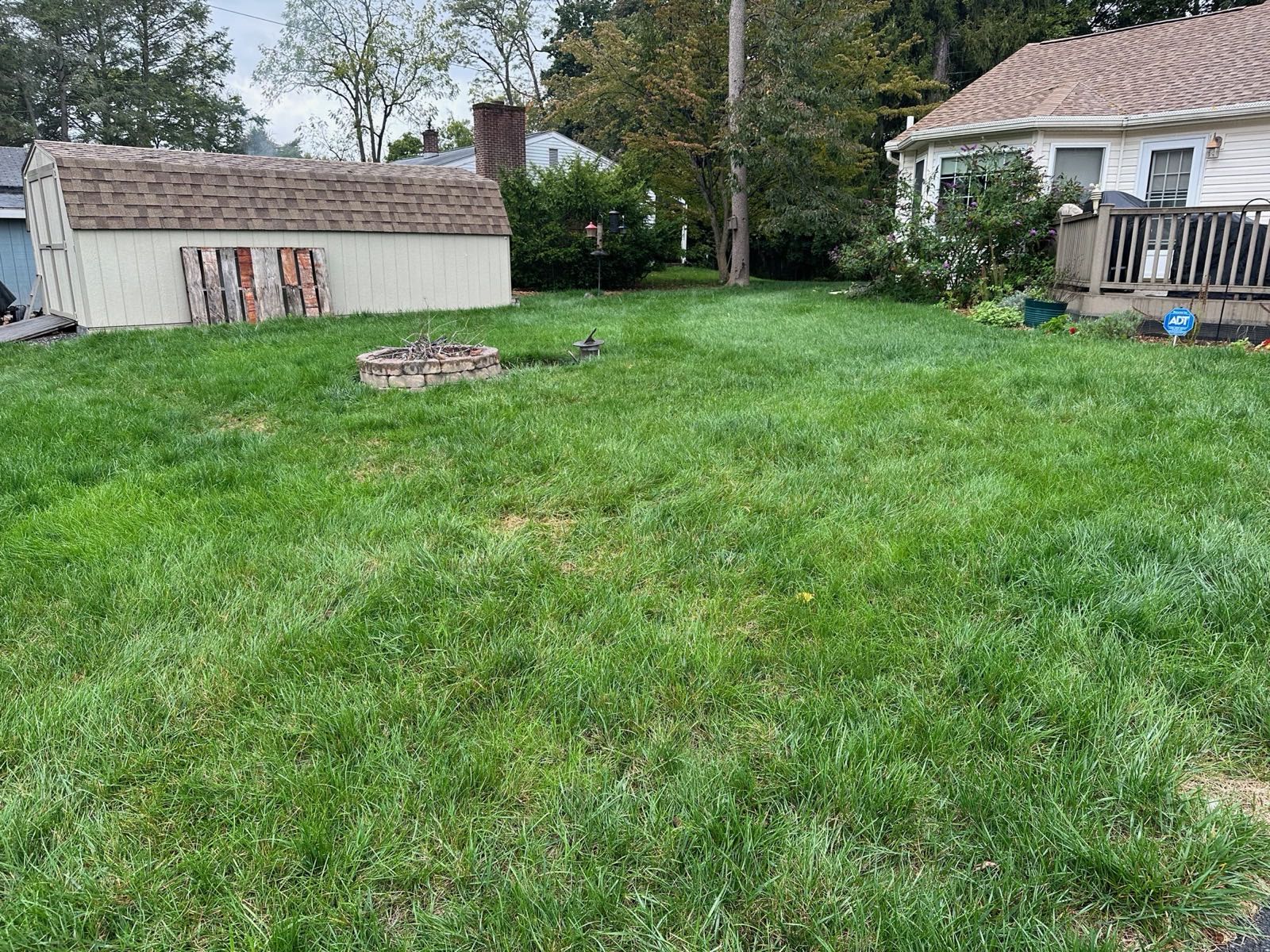
The biological seeding window for Harrisburg-area cool-season grasses runs August 15 through September 20. But we schedule our own core aeration and overseeding work only during the first weeks of September — that's the consistent sweet spot for soil temperature, moisture, and root establishment year after year. Booking early in the window also gives seedlings 6+ weeks of mild fall weather before winter dormancy.
Outside that window:
Just throwing seed on top of an existing lawn rarely works — grass seed needs to contact bare soil to germinate. The full process for a renovation looks like this:
Pulled cores break up surface compaction, expose soil, and give seed somewhere to land that actually has moisture and root space. We don't recommend "spike" aeration — it compacts the soil more, not less. Pulled-core machines only.
For most Central PA lawns, a turf-type tall fescue blend is the workhorse — drought tolerant, disease resistant, holds up to foot traffic, stays green into late fall. Add some Kentucky bluegrass for fill-in and self-repair. Skip the cheap "contractor mix" with annual ryegrass; it's a one-year band-aid.
A light starter fertilizer with phosphorus (which Pennsylvania regulates — only legal at seeding or when soil tests low) feeds the seedlings during root establishment. Apply at seeding, then again at 4 weeks.
The first 2 weeks: light watering 2–3 times a day to keep the surface moist (don't let it dry out — seedlings die in hours, not days). Weeks 3–4: cut back to once a day, deeper. After establishment: normal 1-inch-per-week deep watering. Cool fall weather makes this easier than spring or summer.
Let new grass reach 4 inches before first mow. Cut to 3 inches, no shorter. Mow with a sharp blade — a dull blade rips young seedlings out of the soil instead of cutting them.
Most broadleaf herbicides will damage or kill seedlings under 4–6 weeks old. If you're overseeding, plan to skip the fall broadleaf application or apply it at least 4 weeks before seeding. We sequence the fall calendar for clients so the weed control and overseeding don't conflict.
If your lawn is thin enough that you can see soil between the grass plants, has more crabgrass than desired turf, or just looks tired after a brutal summer, fall renovation is the highest-leverage thing you can do. Call or text 717-379-3248 for a free walk-through and we'll tell you whether it needs full renovation, just overseeding, or whether the better play is to fix the underlying soil problem first.
Call or text 717-379-3248. We'll tell you what your lawn actually needs and time it for the right window.
Call or Text 717-379-3248