Big black ants wandering the kitchen in April, a small pile of what looks like sawdust under the window trim, maybe a faint rustling inside a wall at night. The first question everybody asks is the right one: is this termites? Usually no. But carpenter ants are the most damaging structural insect most Central PA homeowners will ever actually meet — and they're nearly always pointing at a water problem you didn't know you had.
Free Estimate — Call or Text 717-379-3248This ID matters more than most, because the three call for completely different responses — and one of them is a much bigger financial problem than the others.
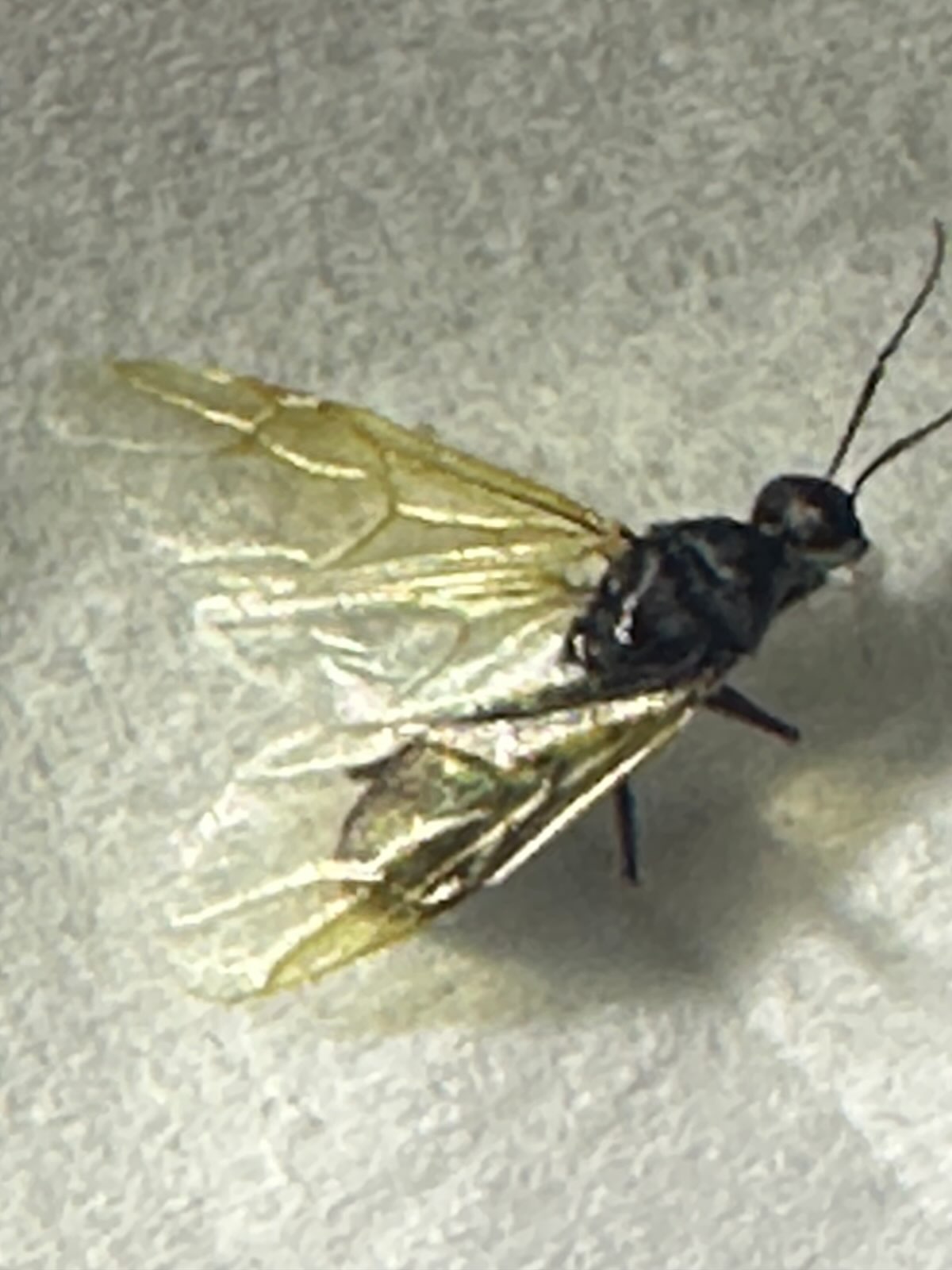
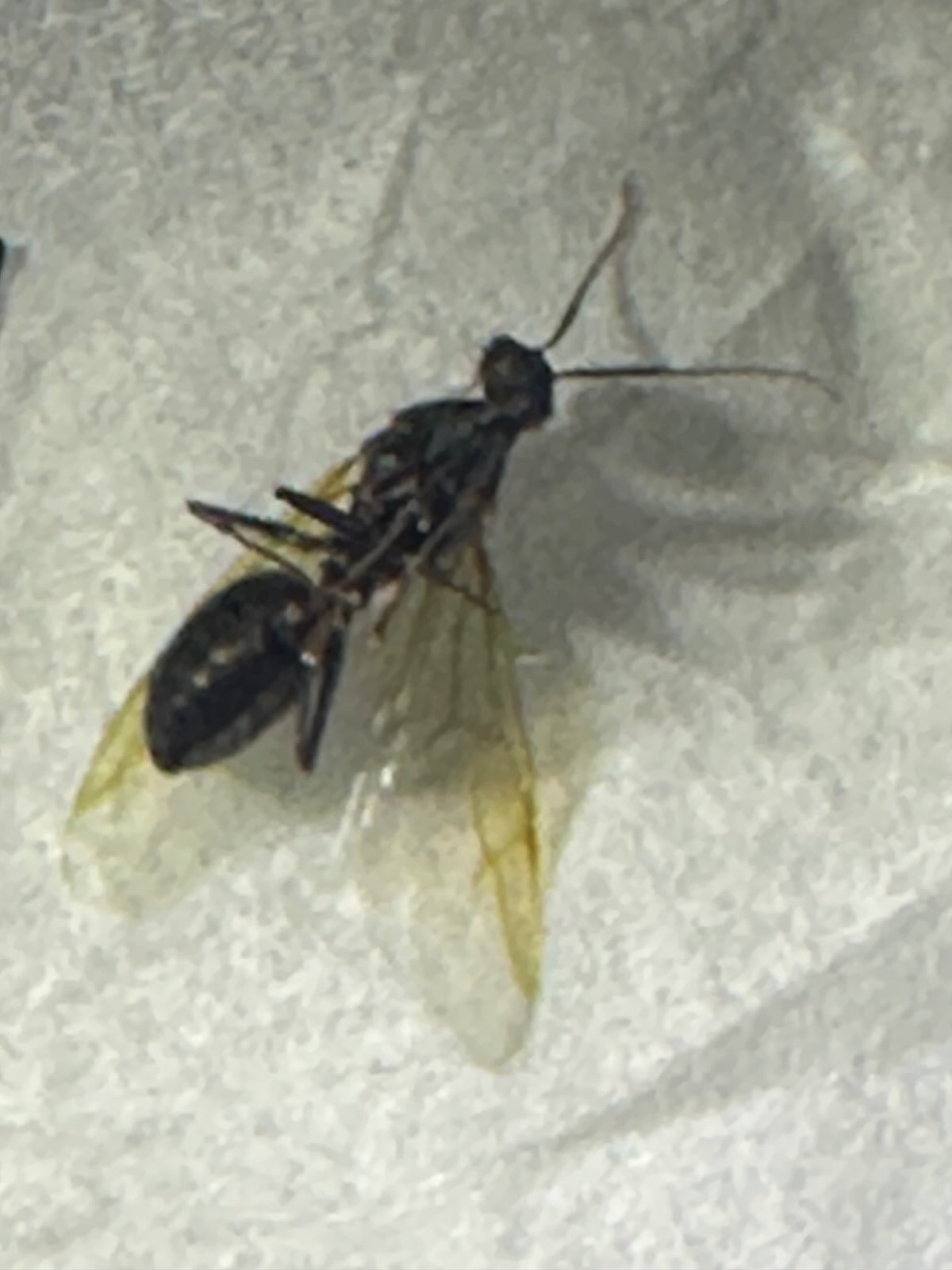
Large (roughly ¼ to ½ inch), usually black, with a pinched waist, bent (elbowed) antennae, and one uneven pair of wings if swarming. They excavate wood to nest in it — they don't eat it. Galleries look smooth and sanded, and they push debris out.
Straight-sided body with no pinched waist, straight antennae, and two equal pairs of wings. They eat wood, leave mud in their galleries, and build mud tubes on foundations. Faster, costlier damage — and a different treatment entirely. If that's what you have, we'll say so.
Odorous house ants and pavement ants are small, trail in numbers along counters and walkways, and cause no structural damage. Annoying, and a much simpler job — see general pest control.
Carpenter ants push out "frass" — fine wood shavings mixed with insect parts and dead ants, usually piling below a crack, window frame, or door casing. That pile means a nest above it, not just a passing forager. It's the single most useful thing you can photograph for us.
Carpenter ants strongly prefer wood that is or has been damp and softened. Find the water and you've usually found the nest — which is why a treatment that ignores the moisture is a treatment you'll be buying again.
Leaking or undersized gutters, roof and flashing leaks, window and door frames with failed caulk, the wall behind a shower or dishwasher, sill plates in damp crawl spaces, and porch columns and deck ledgers.
The main colony is often outdoors — a stump, a dead limb, a woodpile, a hollow tree — with satellite nests indoors. That's why killing the ants you see indoors changes nothing: the queen is somewhere else, resupplying. Treatment has to reach the whole system.
Winged carpenter ants appearing indoors in spring is a strong sign of an established indoor nest, not a wandering scout. Ants outdoors are normal; a swarm at your window in March is a phone call.
Our service is perimeter-only. We apply non-repellent products along the exterior foundation, entry points, and the trails the ants are actually using — products they carry back and share, so the treatment reaches the nest without anyone spraying inside your home. We also treat exterior harborage: the stump, woodpile, or dead limb the parent colony is working from.
We serve Dauphin, Cumberland, Lebanon, Perry, York, and Lancaster Counties — including:
Harrisburg, Paxtang, Penbrook, Steelton, Highspire, Middletown, Hummelstown, Hershey, Palmyra, Annville, Cleona, Lebanon, Grantville, Linglestown, Colonial Park, Susquehanna Township, Lower Paxton, Camp Hill, Mechanicsburg, Lemoyne, New Cumberland, Wormleysburg, Enola, Marysville, Halifax, Millersburg, Elizabethtown, Mount Joy, Mount Wolf, Manchester, Dillsburg, Carlisle, Boiling Springs, and surrounding Central PA communities.
Licensed PA applicator since 2005. Free on-site estimates across Harrisburg and Central PA.
Call or Text 717-379-3248