
The big black-and-yellow bees that hover around your deck rail in May aren't bumblebees — and the perfectly round holes appearing in your cedar fascia aren't going to stop on their own.
Carpenter bees look almost identical to bumblebees at first glance — fat, fuzzy, slow, loud. The tell:
Carpenter bees are solitary — there's no hive. Each female bores her own tunnel and lays a small number of eggs inside. That's why you see one or two hovering around the deck instead of dozens swarming a single nest.
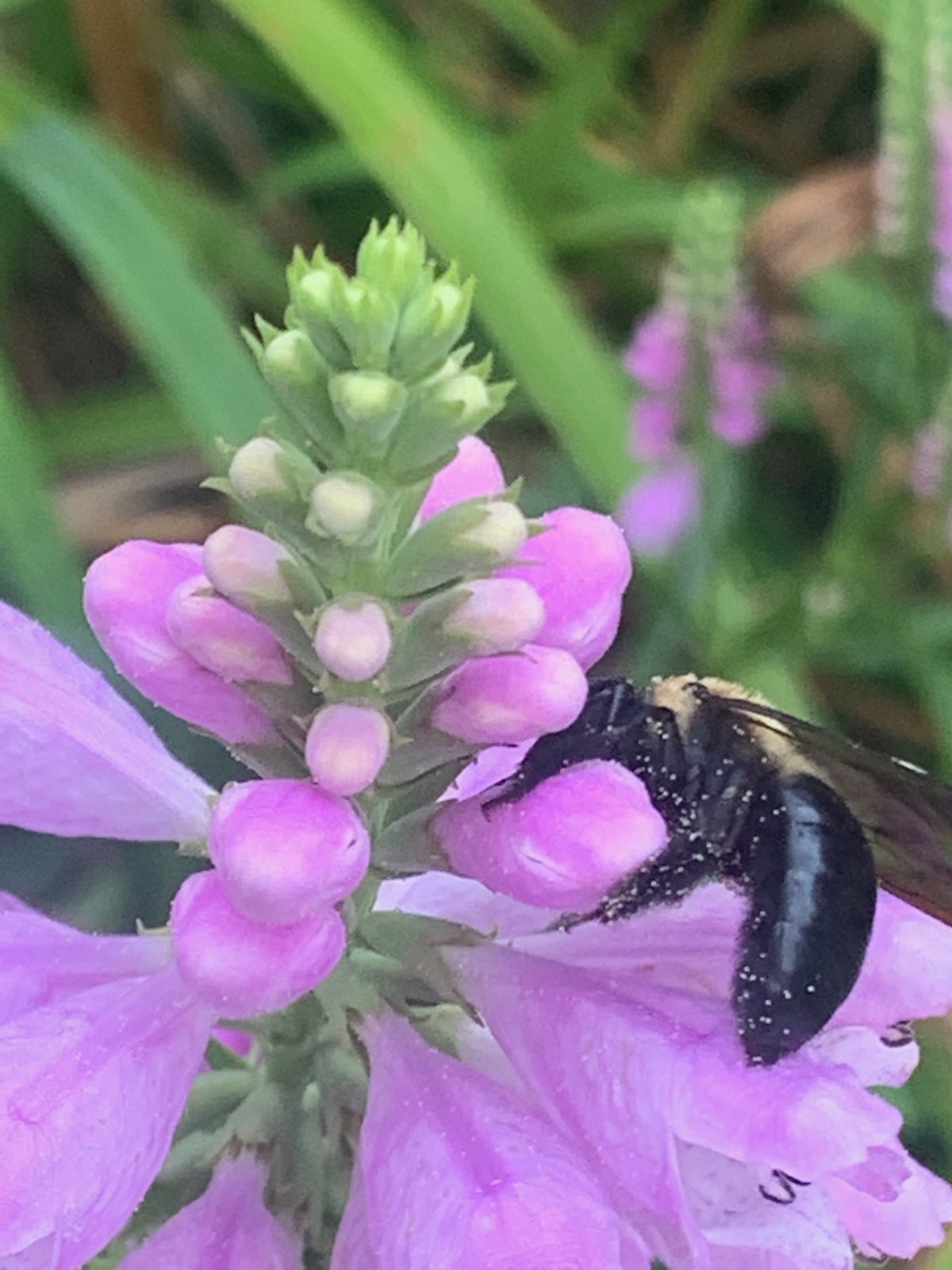
In early to mid May in Central PA, female carpenter bees look for unfinished or weathered softwood to bore into — pine, cedar, redwood, cypress. They drill a perfectly round 1/2-inch entrance hole that goes straight in about an inch, then turns 90 degrees and runs along the grain for 4–6 inches. Inside the tunnel they lay eggs in a series of chambers, each provisioned with pollen and sealed with chewed wood pulp.
The male carpenter bee is the one that hovers aggressively in front of the entrance hole defending the territory. He looks scary but he has no stinger — he can't sting you. The female has a stinger but rarely uses it unless physically handled.
Year 1 of an infestation is mostly cosmetic — small holes you can fill. The real damage comes from two compounding factors:
Common targets in Central PA: cedar fascia and rake boards, redwood deck rails and pergolas, soffits, log home siding, garden sheds with weathered trim, and exposed barn beams.
An insecticide dust pushed into each entrance hole in May coats the female as she enters and exits. She carries it into the tunnel and onto the eggs. One treatment typically ends the activity in that tunnel. Liquid sprays don't penetrate as effectively as dust.
Once the tunnel is treated and the activity has stopped (usually 1–2 weeks later), seal each entrance hole with wood putty or a wood dowel set in glue. This blocks reuse next year and prevents woodpecker discovery. Don't seal the hole before treatment — trapping live bees inside often makes them chew a new exit elsewhere.
Carpenter bees strongly prefer raw, weathered, or stained-but-not-painted wood. They mostly avoid painted surfaces. The long-term fix for a chronically attacked fascia or deck rail is paint, not stain. For natural-finish cedar, applications of a heavy oil sealer help but aren't as effective.
For fascia that's been chewed for years, replacing with PVC trim, cement board, or a hardwood like white oak ends the cycle. Carpenter bees don't drill these materials.
We work hard to make sure honey bees and bumblebees aren't impacted by carpenter bee treatment. Hole-by-hole dust application targets only the carpenter bee tunnels — there's no exposure to pollinators on flowers. We don't spray broadly. As a working beekeeper ourselves, this is non-negotiable on every property.
If you have active holes in fascia, deck rails, or a pergola, May is the window. The longer you wait, the more eggs are laid and the more woodpecker damage compounds. Call or text 717-379-3248 for a free walk-around — we'll count the active tunnels and recommend treatment, sealing, or whether full board replacement is the better long-term play.
Call or text 717-379-3248. We'll identify the active tunnels and treat in one visit.
Call or Text 717-379-3248