
Crabgrass pre-emergent is the single most important lawn application of the year — and the easiest to mistime. Here's the window for Harrisburg and Central PA.
Pre-emergent herbicides don't kill crabgrass plants you can see. They form a chemical barrier in the top layer of soil that blocks seed germination. Crabgrass seeds that try to sprout hit the barrier and die before they reach the surface.
That means two things:
Crabgrass germinates when soil temperatures at 1 inch deep reach 55°F for 3–4 consecutive days. In Harrisburg-area soils, that hits between roughly April 5 and April 25 in a normal year — earlier in warm springs, later in cold ones.
You want the pre-emergent down 2–3 weeks before that, so the barrier is in place and watered in. That puts the ideal application window at mid-March through early April.
Most pre-emergent products break down over 8–12 weeks. If you apply in February or very early March, the barrier may weaken by mid-June — exactly when late-germinating crabgrass would sneak through. For long-season control, applications timed correctly hold all the way through July.
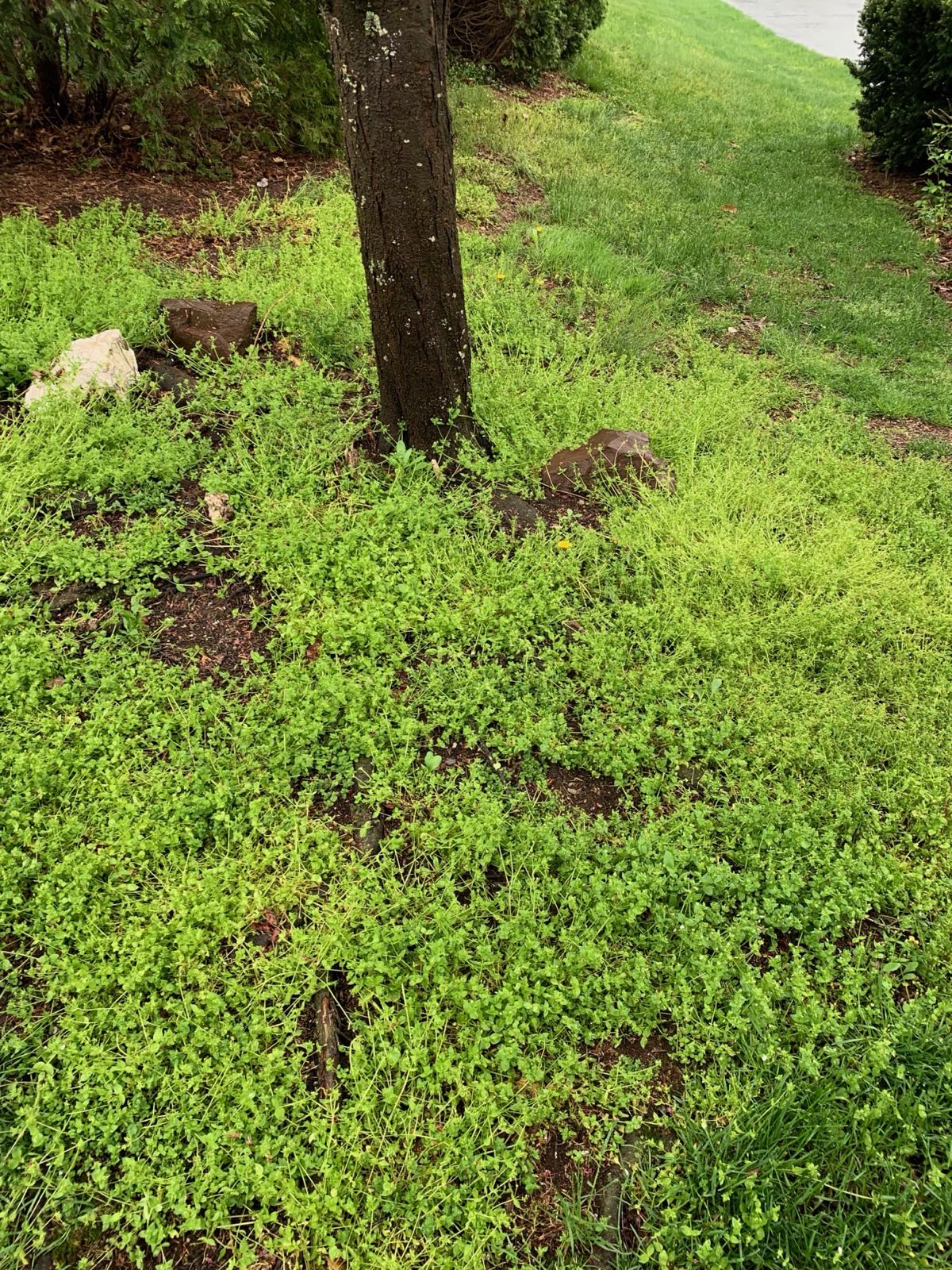
If you missed the window — pre-emergent applied in May or June — you're treating soil where crabgrass has already germinated. The pre-emergent does nothing for plants already up. You'll need a post-emergent crabgrass killer instead (different chemistry, usually quinclorac), and post-emergent only works on young crabgrass. Once crabgrass is mature with seed heads, neither product works.
Single applications in a warm spring leave a coverage gap by midsummer. The cleaner approach for Central PA — and what we use on most lawns — is a split application:
This handles both the early Japanese crabgrass and the later smooth crabgrass (which germinates in May–June at warmer soil temps).
This is the single most common contradiction homeowners hit. Pre-emergent kills any seed it touches — including the grass seed you'd put down for overseeding. You can't have both in the same spring.
The right move: if your lawn is thin enough that you'll need to overseed, skip spring pre-emergent, accept the crabgrass for one year, overseed in fall (see our fall renovation article), and start pre-emergent the following spring.
Corn gluten meal is the only widely available organic pre-emergent. It works but is much less reliable than synthetic options — coverage rate is roughly 40–60% versus 90%+ for the synthetics. Application timing is the same window. For our fully organic program clients we use corn gluten and combine it with denser overseeding and higher mowing height; thick turf is the single best crabgrass defense organic or otherwise.
Pre-emergent herbicides have low pollinator risk because they target seeds, not insects. The bigger pollinator question with spring lawn applications is the broadleaf weed killer often combined with pre-emergent — dandelions and clover blooming in the lawn are an early-spring nectar source for honey bees. We mow off the bloom or wait for the petals to drop before applying broadleaf control, and we apply spot treatments rather than blanket sprays on lawns with active bloom.
If you want crabgrass control this year — and you missed the window once before — get on the calendar in early March. We schedule pre-emergent applications based on soil temperature trends, not the calendar date, so timing varies year to year. Call or text 717-379-3248.
Call or text 717-379-3248. Get on the spring pre-emergent calendar.
Call or Text 717-379-3248