
They showed up in late June, and by mid-July your roses look like lace. Here's what actually works — and why the beetles on your plants today are next year's grubs in your lawn.
Japanese beetle adults emerge from Central PA lawns in late June, peak through July, and taper off by mid-August. That's roughly a six-week flight — and in a bad year, it can feel like all six weeks happen on your property.
You'll know them on sight: metallic green head and body, coppery wing covers, about half an inch long, usually feeding in groups. The damage is just as recognizable — leaves eaten between the veins until only the skeleton remains. Roses, grapes, lindens, cherries, crabapples, raspberries, and Virginia creeper top their menu, but they'll feed on over 300 plant species.
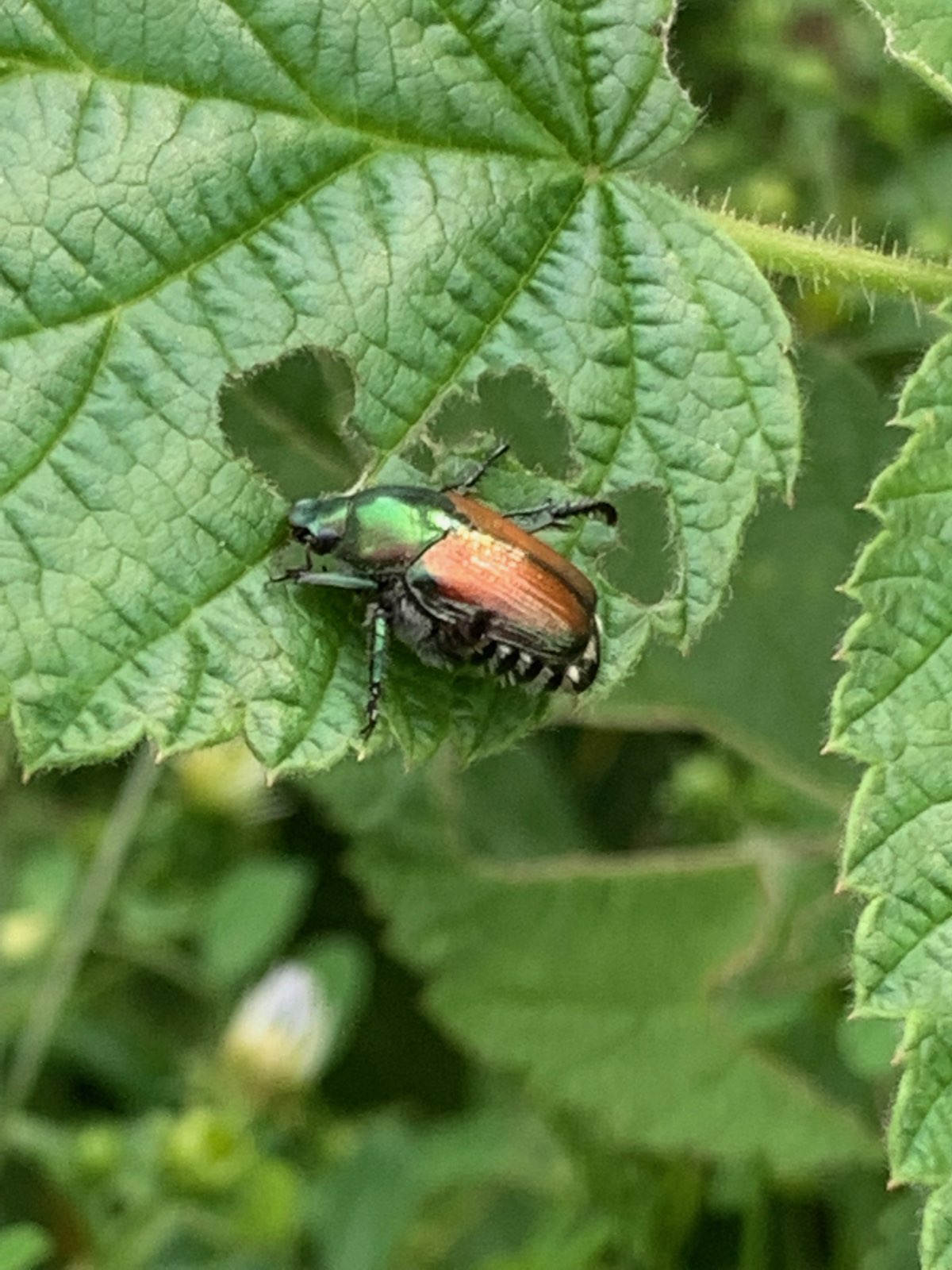
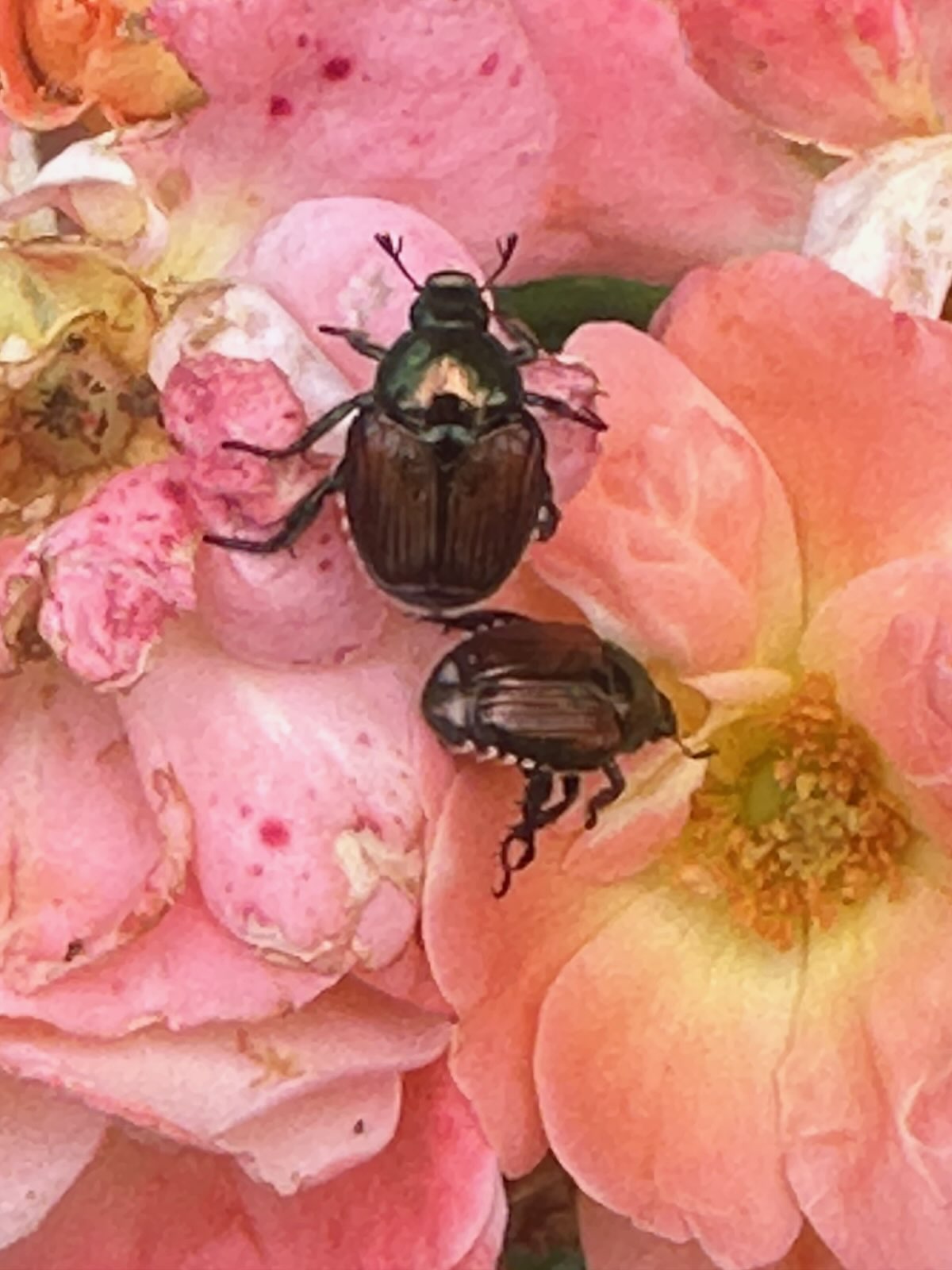
Japanese beetles are social feeders. When beetles chew a leaf, the damaged plant tissue releases odors that attract more beetles — which is why one rose bush gets destroyed while the one across the yard barely gets touched. Damage snowballs: the earlier you interrupt the feeding, the less attractive the plant stays.
In the early morning, beetles are sluggish. Hold a bucket of soapy water under the branch and tap — they drop straight in. Done every day or two during the flight, this genuinely keeps small plantings presentable.
High-value ornamentals — lindens, cherries, roses, grape arbors — can be protected with properly timed foliar applications during the flight window. Product choice and timing matter, and this is where being a working beekeeper shapes how we operate: we don't spray plants in bloom, and we choose materials and application windows that protect pollinators while still stopping the beetles. That balance is exactly what a licensed applicator is for.
One-time sprays applied after the damage peaks. By the time a plant is skeletonized, the aggregation scent has been broadcasting for weeks. Treatment works best early in the flight — late June and early July — not as a rescue in August.
Every female beetle feeding on your roses right now will lay 40 to 60 eggs in nearby turf during July and early August. She picks moist, healthy, irrigated lawn — the exact lawn you've been watering. Those eggs hatch into white grubs that chew grass roots through late summer and fall.
That’s why the systemic preventive goes down in May or June, ahead of egg-laying. A systemic applied then sits in the root zone waiting for eggs to hatch, and they're far more effective (and gentler) than curative treatments after damage appears in August or September. If you saw heavy beetle pressure this month, your lawn is a strong candidate.
Not sure whether last year's brown patches were grubs? Our article on spotting and treating lawn grubs covers the tug test and the square-foot dig.
Japanese beetles are a July pest with a September echo. Protect the plants they're eating now, skip the traps, and if the pressure is heavy, put down grub prevention while the window is still open. We handle both halves — plant health care for the adults and lawn care for the grubs.
Call or text 717-379-3248 or email Lawnsplantspests@gmail.com. Locally owned. Licensed and insured. No contracts.
Call or Text 717-379-3248