Adults get the press, but the spring and early summer nymph stages are when treatment actually moves the needle. Here's what to look for in Harrisburg and Central PA, and the window that works.
Spotted lanternfly (Lycorma delicatula) goes through four nymph stages — called instars — before becoming the spotted adult most people recognize. In Central PA the eggs hatch in early-to-mid May, and the nymphs cycle through the four stages from May into July. If you're treating, this is the season that matters.
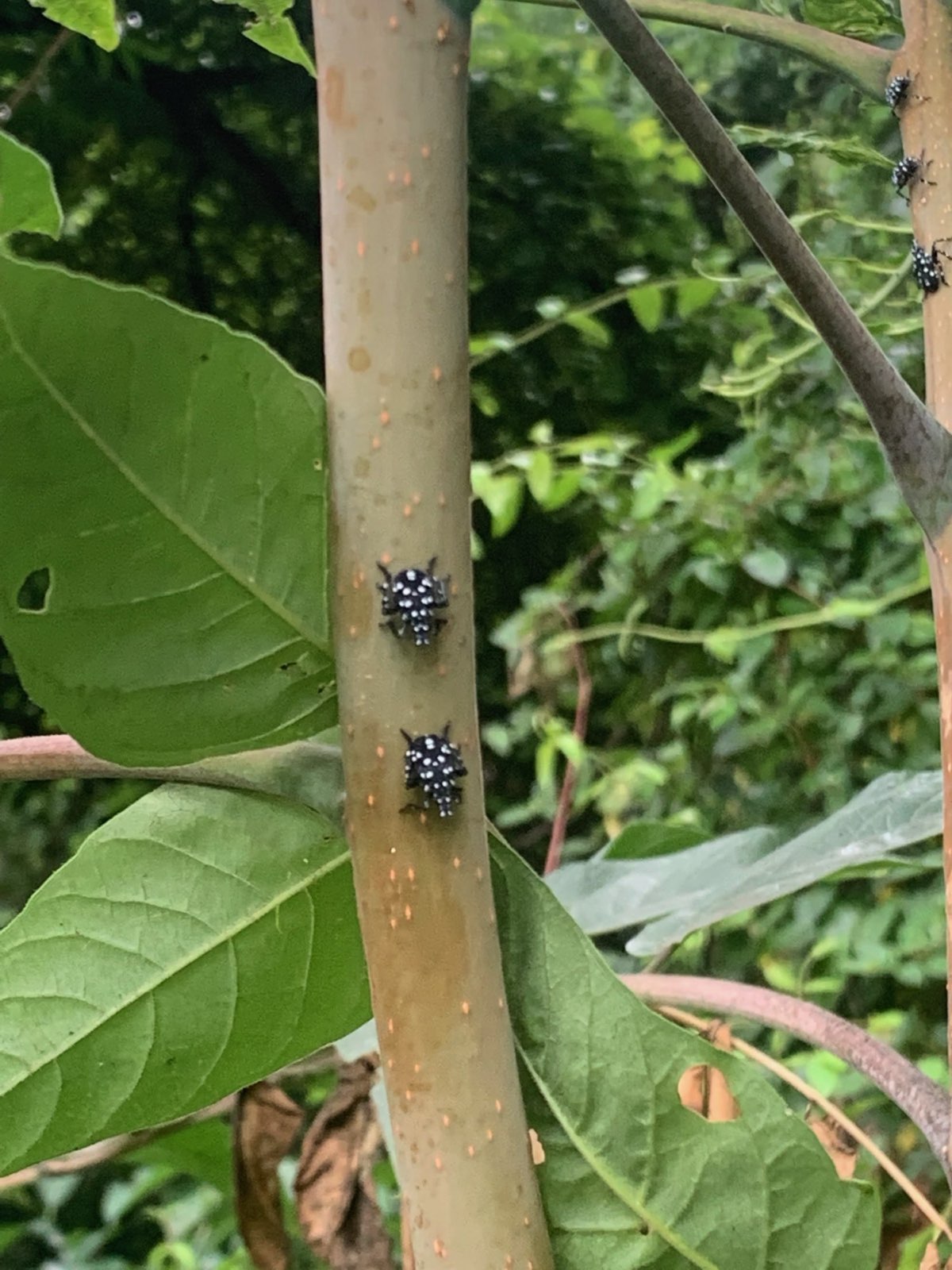
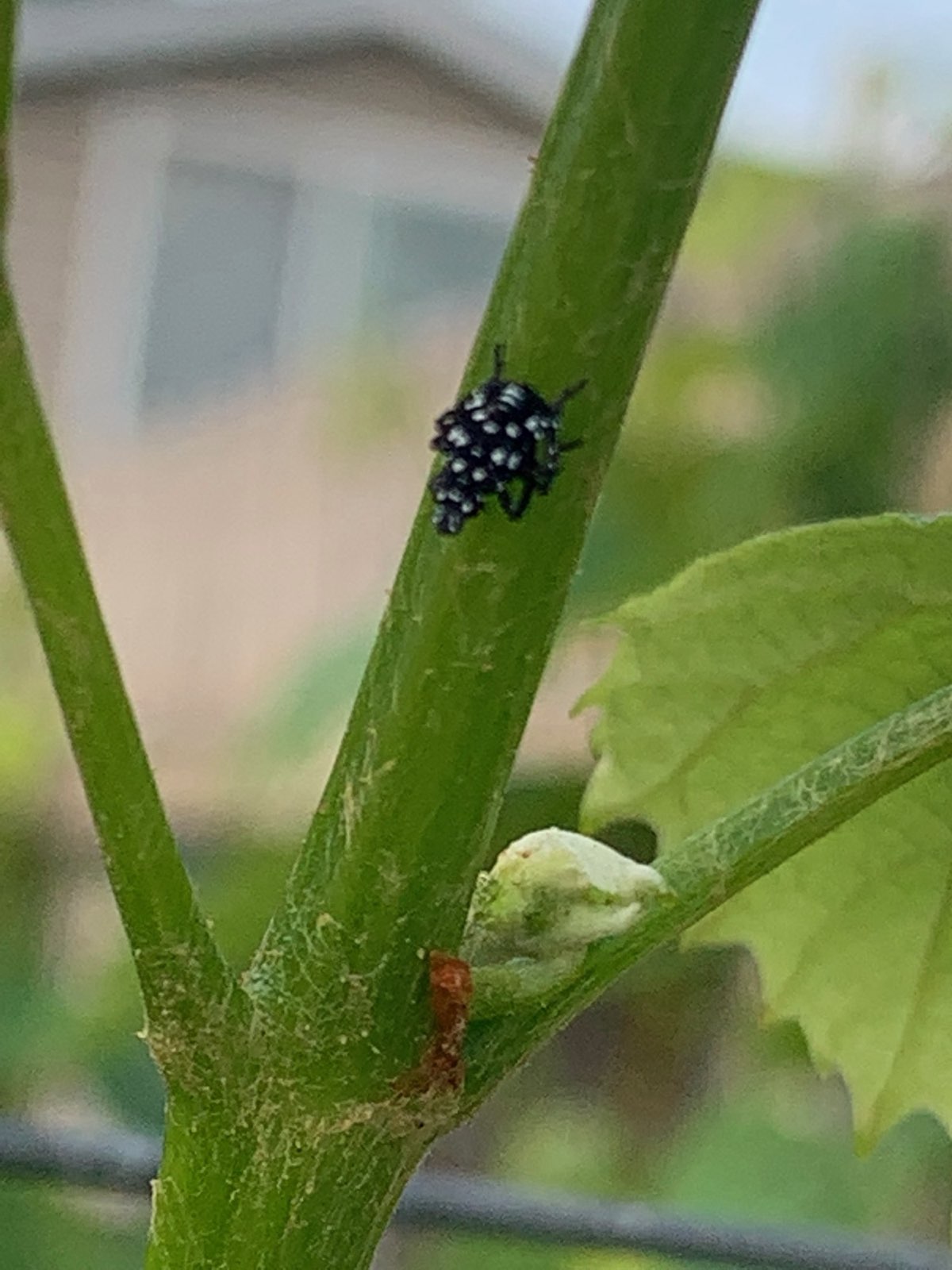
The first three nymph stages all look similar — small (¼ to ½ inch), wingless, jet black with bright white spots. They're easy to mistake for ticks at a glance, but they move fast and jump when disturbed. You'll find them clustered on tree of heaven (Ailanthus altissima), grapevines, maples, walnuts, and willows.
The fourth nymph stage shows up in late June through July and looks dramatically different — bright red with black stripes and white spots. Same body size, same behavior, same host trees, but unmistakably red. This is the stage many homeowners notice first, because the color stands out.
Spotted lanternfly feeds by piercing bark and stems and sucking sap. The damage shows up three ways:
Grapevines, hops, and fruit trees take the worst hit — lanternfly can kill grapevines outright in a single season. For the average Harrisburg homeowner, the biggest practical problem is the honeydew, the wasps, and the long-term damage to mature shade trees.
Two windows matter most in Central PA:
Nymphs are small, clustered, and easier to kill than adults. Treatment during this window protects host trees before damage accumulates. Soil-applied systemic insecticides take 4–6 weeks to move through the tree, so applications made in April or early May are working by the time nymphs are feeding.
Adults are larger, more mobile, and harder to kill — but this is the stage that lays eggs. Treatments here are about reducing next year's population. Bark contact treatments and trunk sprays work well for ornamental trees.
Many spotted lanternfly treatments — especially imidacloprid soil drenches and dinotefuran trunk sprays — are highly toxic to bees if applied to a tree that's flowering or about to flower. Don't treat a flowering tree. Wait until bloom is over.
We're a working beekeeper ourselves through The Alleman Apiary, so we time lanternfly treatments around bloom on every property we touch. For trees with bees actively foraging — silver maples in early spring, lindens in midsummer — we'll recommend a non-systemic alternative or wait for the right window.
If you have valuable shade trees, grapevines, or fruit trees with active lanternfly pressure, soil-applied systemic treatment is the most effective option — and the timing matters. Call or text 717-379-3248 and we'll walk your property, identify the host trees, and time the treatment around bloom and around your pollinators.
Call or text 717-379-3248. We'll identify the host trees on your property and tell you whether treatment is worth it — honest answers, no upselling.
Call or Text 717-379-3248