How to Have a Mosquito-Free Backyard in Central PA
One-shot fogs make great photos. They don't make a usable backyard. Here's what does — and how to do it without taking out the pollinators in the process.
By Devon Alleman · PA-licensed pesticide applicator since 2005 · Updated July 25, 2026
PA Licensed Pesticide Applicator Since 2005In2Care & EcoGuard Plus AvailableWorking BeekeeperFree Estimates — No Contracts
Two species cause most of the bite pressure in Central PA backyards:
Asian tiger mosquito (Aedes albopictus) — black-and-white striped, daytime biter, lives entirely in your yard. Breeds in tiny amounts of standing water — a clogged downspout, a kid's toy, a folded tarp. Generally won't fly more than 100–200 feet from where she hatched.
Common house mosquito (Culex pipiens) — dusk and dawn biter, breeds in stagnant standing water like neglected birdbaths, low spots, French drains, and storm sewers.
The implication: most of your mosquitoes are born on your property. Spraying the neighbor's tree line does nothing if the breeding site is the kids' wading pool you forgot about. Source reduction is the foundation of every successful program.
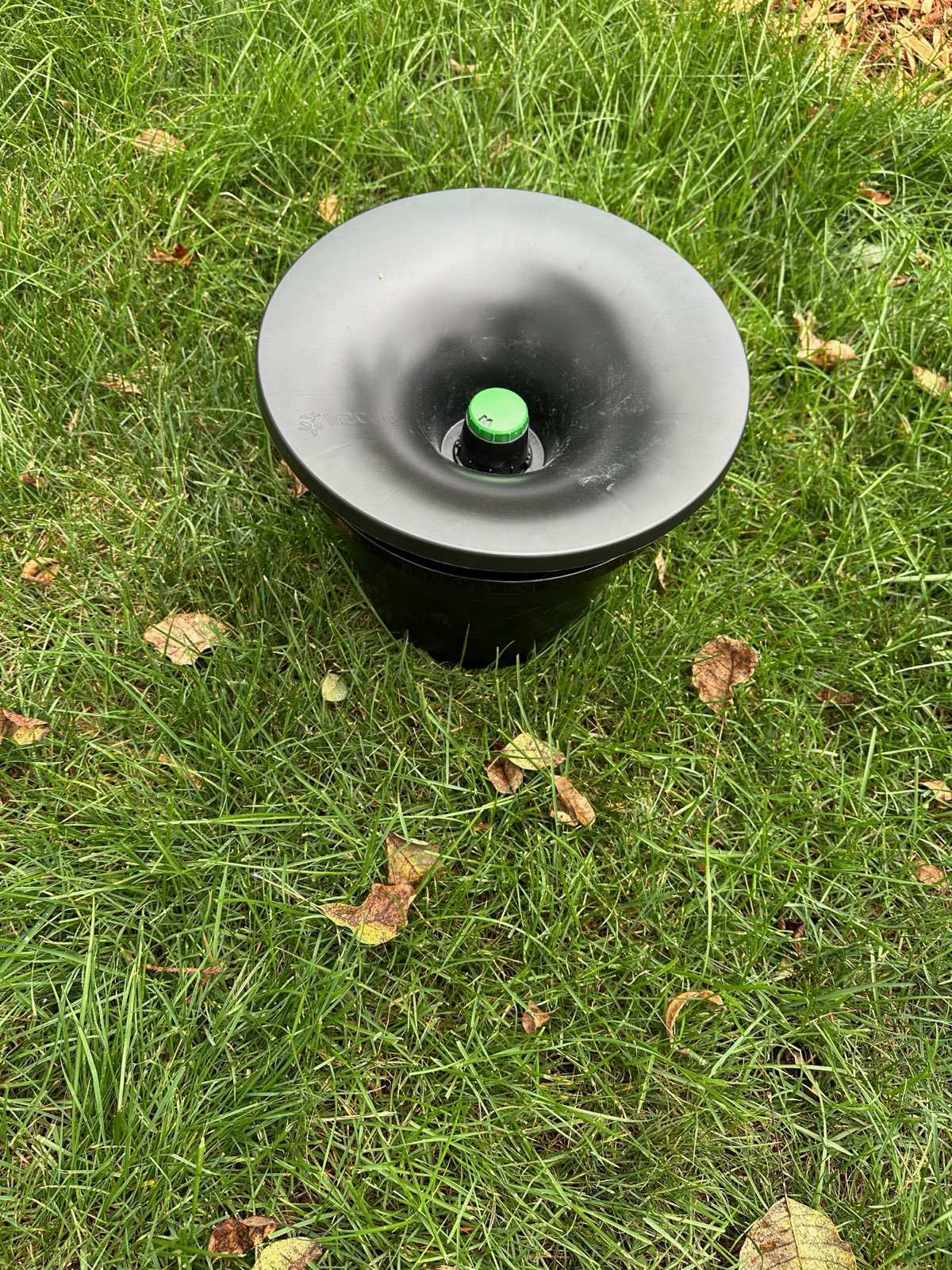
A mosquito station set out in a backyard.
Step 1: Eliminate the Breeding Sites You Can
Asian tiger mosquito can complete a full life cycle in a bottle cap of water in 10 days. Walk your property and dump or remove:
Plant saucers, bird baths (refresh weekly), pet bowls left outside
Clogged gutters and downspout extensions
Tarps and folded patio furniture covers holding water
Wheelbarrows, buckets, recycling bins, kids' toys
Old tires (the classic — single biggest residential breeding source)
Corrugated drain pipe outlets that don't fully drain
Tree holes, hollow stumps, leaf-clogged window wells
Step 2: Treat the Breeding Sites You Can't
Some water sources are functional and can't be drained — ornamental ponds, rain barrels, French drains, swimming pool overflow areas, gutters between cleanings. For these, larvicides do the work:
Bti briquets (Mosquito Dunks) — biological larvicide containing Bacillus thuringiensis israelensis. Drop one in standing water; lasts 30 days. Safe for fish, frogs, wildlife, and pollinators. Available at any garden center.
In2Care stations — a black bucket with treated water that attracts adult female Asian tiger mosquitoes. They lay eggs that don't survive, and they pick up larvicide on their legs that they spread to other breeding sites they visit. One station covers ~400 square yards. Especially useful for Asian tiger mosquito.
Why In2Care matters in Central PA: Asian tiger mosquito is now the dominant backyard species across the Harrisburg area. She lays eggs in many small sites you can't find. In2Care lets her find them and gets larvicide carried back to the small hidden sources.
Step 3: Yard Barrier Treatment for Adults
Even with breeding under control, adult mosquitoes drift in from neighboring properties, woodlots, and storm drains. A barrier treatment applied to the resting surfaces where mosquitoes hide during the day knocks them down and provides 3–4 weeks of residual protection:
Undersides of leaves on shrubs and ornamentals at the property edge
Dense ornamental grasses
Under decks, around foundation plantings
Tall mulched beds
Behind landscape walls and around HVAC equipment
The Pollinator Question
This is the part most companies skip. Standard yard barrier sprays (pyrethroids) are highly toxic to bees if they contact wet treatment. Done wrong, a mosquito spray can wipe out a backyard pollinator population for weeks.
What we do differently as a working beekeeper:
Never spray flowering plants. Nothing in bloom gets treated — including the flowering weeds in a lawn — so some areas simply get skipped. That is a deliberate trade, and we would rather lose a little coverage than a hive.
Let the treatment dry before bees are on it. Pyrethroids are hazardous to bees while wet and far less so once dry, so placement and product choice do the work rather than trying to spray around a bee's schedule.
Offer EcoGuard Plus organic option. Garlic-based formulation derived from food-grade ingredients. Less residual (10–14 days vs 28+) but pollinator-safe even on flowering plants.
Skip the property edge near our clients' bees. For clients with hives, we coordinate the spray zones with the bee location and prevailing wind.
What Doesn't Work
Bug zappers. They kill moths and beetles. Mosquitoes are barely attracted to UV light.
Citronella candles. Local effect at best; useless in any breeze.
"Mosquito plants" (citronella geranium). The leaf has a faint scent. The plant doesn't repel anything.
One-time foggers. Knock down what's flying that hour. The next batch hatches in 4 days.
Ultrasonic devices. Repeatedly shown ineffective in independent testing.
What the Right Program Looks Like
For a typical residential property in Harrisburg, Hershey, Mechanicsburg, or Camp Hill, the program is:
Initial walk-through — identify breeding sources, recommend source reductions you can do yourself.
Monthly barrier treatment — May through October. Choice of conventional or EcoGuard Plus organic.
In2Care stations — placed at the start of the season and serviced every 6 weeks. Especially valuable for properties with tiger mosquito pressure.
Yard walk before each treatment — spot new breeding sources from changes in landscaping, kids' equipment, weather damage.
When to Call Us
If you're losing the backyard to mosquitoes — and especially if you're trying to avoid generic-spray approaches because of bees or kids — we'll walk the property free of charge and tell you what mix of source reduction, In2Care, and barrier treatment makes sense for your specific yard. Call or text 717-379-3248.
Free Mosquito Walk-Through
Call or text 717-379-3248. Take the backyard back without taking out the pollinators.