
Those vigorous shoots coming up from the base of your flowering cherry aren't a bonus — they're rootstock suckers, and they'll outcompete your tree if you ignore them.
Most flowering cherries, fruit trees, and ornamental cherries sold at nurseries are grafted. A vigorous, hardy rootstock is grown from seed or cutting, and the desired variety (the cultivar you actually paid for — say, a Kwanzan or Yoshino cherry) is grafted onto it. You can usually see the graft union as a slight bulge or angled scar 4–12 inches above the soil line.
Everything above the graft is the variety you want. Everything below the graft is the rootstock — which is selected for vigor and disease resistance, not for showy flowers or fruit. When the rootstock sends up shoots (called "suckers" or "watershoots"), those shoots are rootstock genetics. They will not produce the flowers or fruit you bought the tree for.
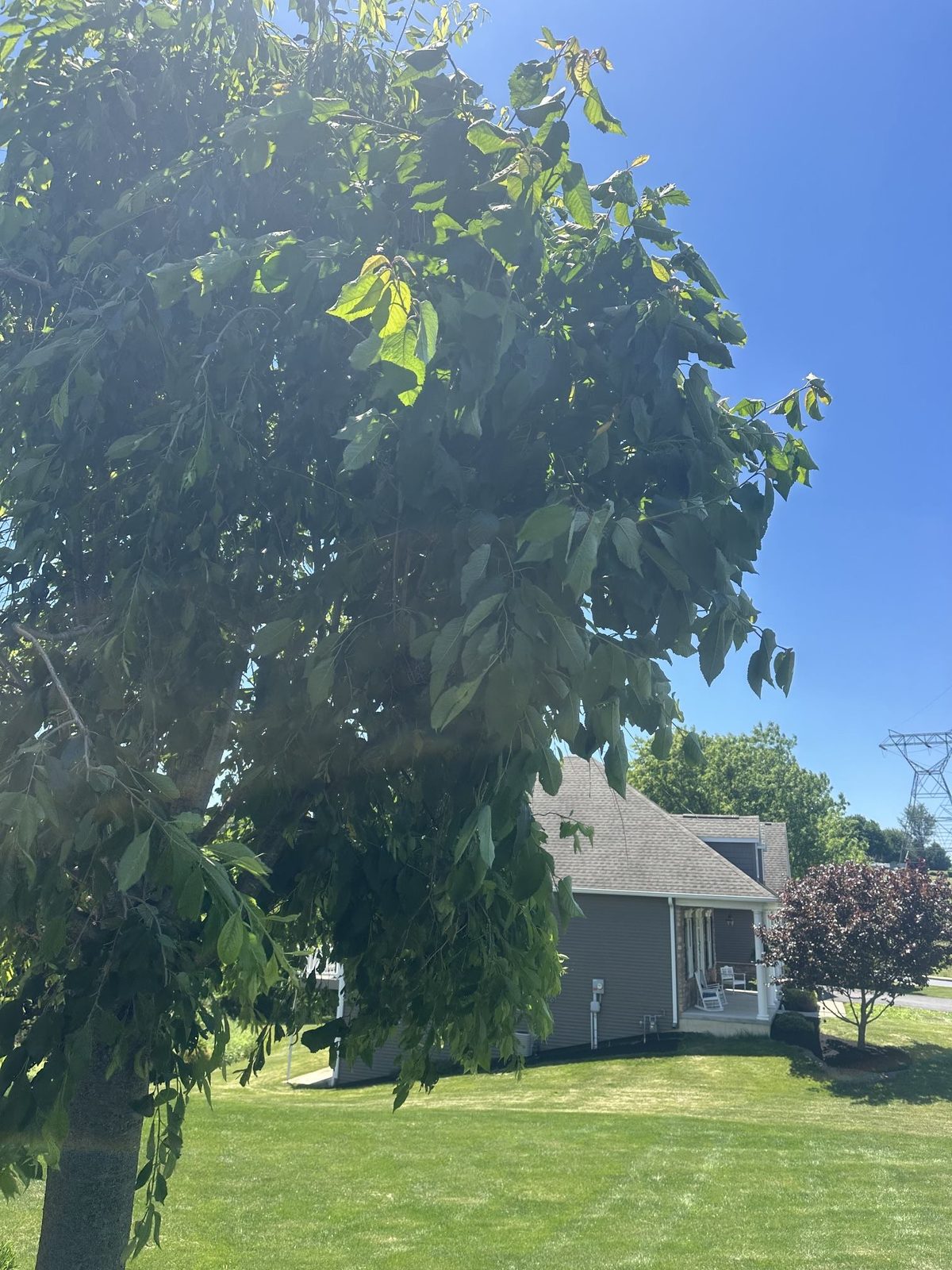
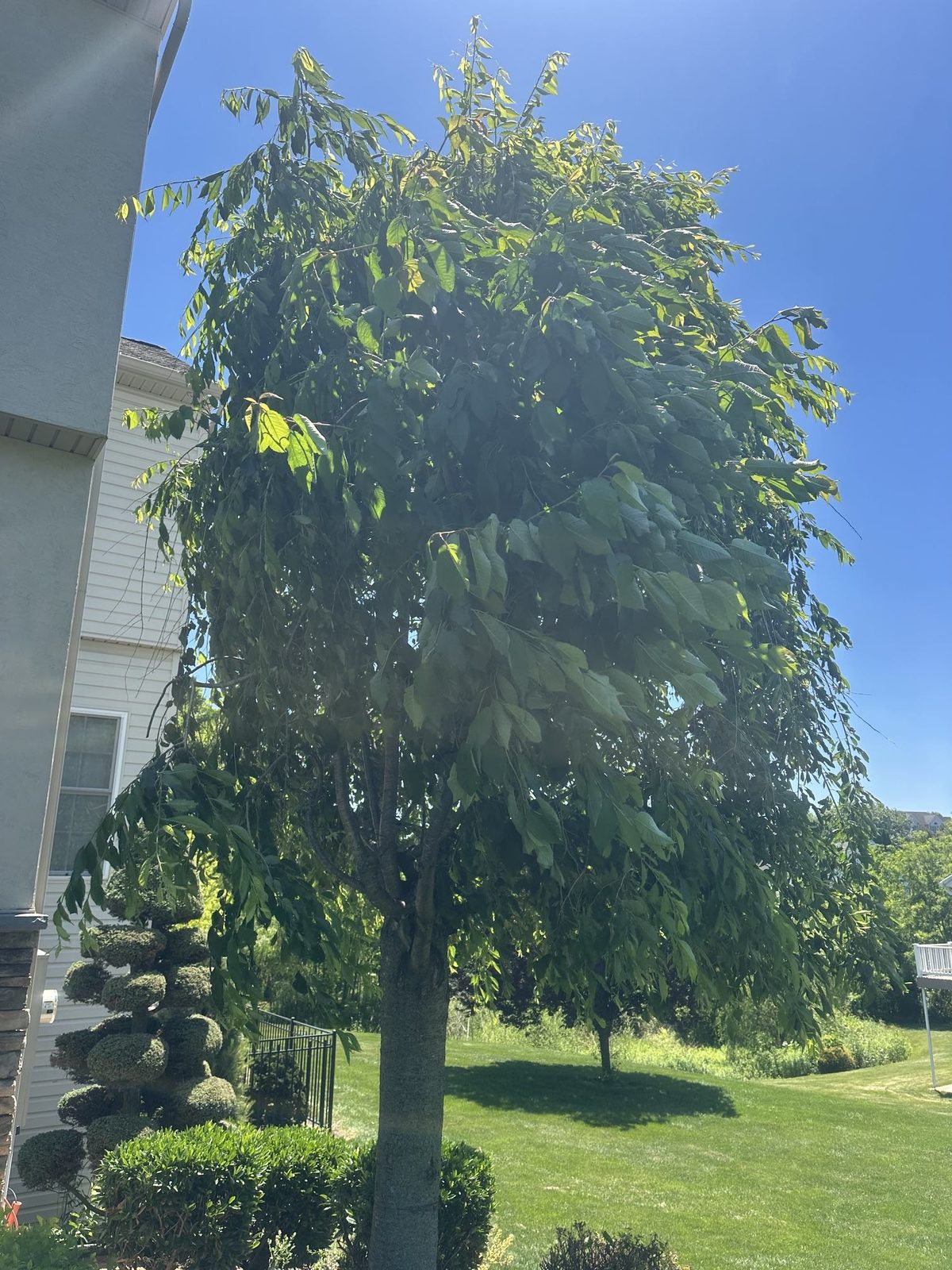
Rootstock suckers show up most often when the grafted top is stressed: drought, transplant shock, mechanical damage to the trunk, severe pruning, or disease. The rootstock senses reduced photosynthetic output from the top and pushes up its own shoots to "help."
In Central PA we see suckers commonly on:
Rootstock genetics are typically more vigorous than the grafted variety. If left alone, suckers will:
Cutting suckers off at the soil surface with pruners is the most common mistake. The remaining buds and rootstock below will sprout three more shoots for every one you remove. This is the same response trees have to pruning above ground — you're triggering more vigorous regrowth.
Gently scrape soil away to expose the base of each sucker. You'll see that the sucker emerges from a root or from the rootstock crown. Cut it as close to that origin point as possible — not at ground level. This removes the dormant buds that would otherwise produce replacement shoots.
On young suckers (less than pencil-thick), gripping at the base and tearing the sucker off downward — like pulling weeds — removes more of the bud tissue than a clean cut. The wound heals fine, and regrowth is much slower.
Late spring through early summer is ideal. Cool, moist soil makes excavation easier and the tree heals quickly. Avoid removing suckers in fall — wounds heal slowly and provide entry points for winter pathogens.
Repeated heavy sucker production usually means the tree is stressed. Worth investigating:
If suckers keep coming back despite removal, or if the grafted top is showing signs of decline (sparse flowers, dieback, leaf disease), we can diagnose the underlying cause and recommend treatment. Plant health care for ornamental cherries is one of our core services — call or text 717-379-3248 with a photo.
Send a photo to 717-379-3248 for free identification and an honest opinion on whether it needs treatment.
Call or Text 717-379-3248